Monitoring
Best Headphones for the Church Sound Booth
Quick answer
A church sound booth needs closed-back headphones with at least 30 dB of isolation, because the job is checking one channel while the room is loud. The Sony MDR-7506 at $113.00 is the fault-finding standard, and the livestream position needs its own pair.
Headphones in a church booth do one job: they let the operator hear a single channel, or the broadcast feed, without the room getting in the way. That makes isolation the first specification and flattery the last. A headphone that makes everything sound pleasant is actively unhelpful here, because the operator is listening for a fault.
The second thing to settle is how many positions need a pair. A booth with a sound operator, a livestream operator and a director is three listeners with different jobs, and headphone distribution becomes its own question, covered in headphone amplifiers for churches. The livestream side of the job is in how to mix for livestream.
On this page
Which position needs which headphone
The listening positions in a church booth, what each one is actually checking, and the headphone characteristic that serves it.
The room mix operator needs isolation above all, while the livestream operator needs accuracy, which is why one pair rarely serves both positions well.
| Position | What they are checking | What matters most | Recommended |
|---|---|---|---|
| Front of house operator | One channel at a time, in a loud room | Isolation | HD 280 Pro |
| Fault finding and soundcheck | Buzzes, hum, dead channels, sibilance | Revealing, slightly bright | MDR-7506 |
| Livestream audio operator | The broadcast mix as viewers hear it | Accuracy across the spectrum | ATH-M50x |
| Video director or producer | Programme and intercom together | Comfort over a long service | HD 280 Pro |
| Three or more listeners | All of the above at once | A way to feed them all | HA8000 V2 |
Isolation figures quoted here are published manufacturer values for closed-back designs. Open-back headphones, which many studio recommendations favour, are the wrong tool in a church booth: they leak the mix into the room and let the room into the mix.
What headphones cannot tell you
They cannot tell you what the room sounds like. A headphone puts the mix directly at the ears with no reverberation, no coverage pattern and no distance, which are the three things that decide whether the congregation can follow the sermon. An operator who mixes on headphones produces a mix that is correct nowhere in the building.
So the rule is that headphones are for checking and the room is for mixing. Solo a channel to find out whether the buzz is on the guitar or the direct box, listen to the broadcast feed to confirm it is not clipping, then take them off and mix what the congregation hears. A booth that is acoustically isolated from the room, which many churches build with the best intentions, creates the same problem permanently and is worth reversing.
They also cannot tell you about level. A quiet mix in headphones and a painfully loud room are entirely compatible, which is why a measurement of the room level matters more than an operator impression. Target levels by service style gives the numbers to check against.
Small church: one pair, chosen for isolation
A single operator in a small church needs one pair of closed-back headphones with enough isolation to hear a soloed channel while the band plays. Comfort matters more than it sounds, because the same volunteer will wear them for a two hour rehearsal. Anything open-backed, and anything designed for listening pleasure, is the wrong purchase.

Sennheiser HD 280 Pro Headphone
$85.49Closed-back with about 32 dB of published isolation, which is what lets an operator check a channel while the room is loud. Folds flat, survives a booth drawer, and costs little enough that a second pair is an easy decision.
Best for: The mix position, and the video operator checking the stream feed
Check price on AmazonWho should not buy this tier: Livestream mixing, where the isolation is welcome but the tonal balance is less revealing than the alternatives.
Mid-size: a checking pair and a broadcast pair
Once the service is streamed, two people are listening to two different things and one pair of headphones cannot serve both. The room operator wants isolation and fault-finding. The stream operator is judging what a viewer on headphones will hear, which needs a more accurate pair. Buying both is cheaper than buying one expensive compromise.

Sony MDR7506 Professional Large Diaphragm Headphone
$113.00Deliberately bright, so a buzz, a plosive, a sibilant vocal or a dying cable is obvious rather than pleasant. The right bias for a checking headphone, and the reason broadcast has used them for decades.
Best for: Finding faults rather than enjoying the mix
Check price on Amazon
Audio-Technica ATH-M50X Professional Studio Monitor Headphones, Black, Professional Grade, Critically Acclaimed, with Detachable Cable
$158.00A more revealing closed-back headphone with a detachable cable, which matters because the cable is what fails. This is the pair for whoever is responsible for what the online congregation actually hears.
Best for: The livestream audio position
Check price on AmazonWho should not buy this tier: Booths with three or more listeners, which need a headphone amplifier rather than more headphone outputs on the console.
Large or multi-campus: several listeners, one feed
A large booth has a sound operator, a broadcast operator, a director and often a trainee, and a console has one headphone socket. Splitting it with adapters gives everybody the same level and not enough of it. A headphone distribution amplifier gives every listener their own volume, which is both a usability fix and a hearing safety one. Plan the rack space with the rack space calculator.
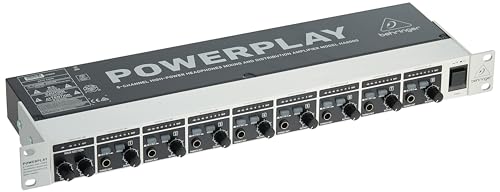
Behringer HA8000 V2 8-Channel High-Power Headphone Mixing and Distribution Amplifier
$189.00Eight independently level-controlled headphone outputs in one rack unit, which covers every listener in a large booth plus a trainee position. One rack unit is a small price for removing every headphone splitter from the desk.
Best for: Distributing one feed to several listeners at the mix position
Check price on Amazon
Behringer POWERPLAY HA4700 4 Channel High-Power Headphones Mixing and Distribution Amplifier
$259.00Four channels with per-channel equalisation and a stereo or mono switch, so the broadcast operator and the room operator can shape their own feed rather than share one setting.
Best for: Four positions that each want something different
Check price on Amazon Audio-Technica ATH-M50X Professional Studio Monitor Headphones, Black, Professional Grade, Critically Acclaimed, with Detachable Cable
$158.00Standardising the headphones across positions means every operator hears the same thing and a fault report from one person means something to another. A detachable cable keeps a rota-worn pair serviceable.
Best for: Standardised listening across a multi-position booth
Check price on AmazonWho should not buy this tier: Do not buy this tier for a booth with one operator. A headphone amplifier for a single listener is a rack unit, a power cable and a set of controls in exchange for nothing, and the money belongs in a second pair of headphones so the trainee has something to wear.
The booth headphones compared
| Model | Price | Wired |
|---|---|---|
| Sennheiser HD 280 Pro Headphone | $85.49 | Yes |
| Sony MDR7506 Professional Large Diaphragm Headphone | $113.00 | Yes |
| Audio-Technica ATH-M50X Professional Studio Monitor Headphones, Black, Professional Grade, Critically Acclaimed, with Detachable Cable | $158.00 | Yes |
| Behringer HA8000 V2 8-Channel High-Power Headphone Mixing and Distribution Amplifier | $189.00 | - |
How we chose
We did not test these products in person and we never claim to. Picks are researched from manufacturer specification sheets and operator manuals, FCC rules where spectrum is involved, published standards, warranty terms, and the recurring themes in verified owner reviews. Every pick is matched to a real room size, seat count or input list rather than to a price bracket, and it is placed in the tier where its capability actually belongs. Where a product is wrong for most churches we say so on the page.
Sources
- Manufacturer published specifications for each headphone listed
- NIOSH recommended exposure limit of 85 dBA over eight hours
- Consensus of verified owner reviews across major retailers
Frequently asked questions
What headphones should a church sound operator use?
Closed-back headphones with at least 30 dB of published isolation, chosen for revealing faults rather than for sounding pleasant. The job is hearing one soloed channel while the room is loud, which needs isolation, and identifying a buzz or a dead cable, which needs an unflattering tonal balance. Open-back headphones leak in both directions and are the wrong tool here.
Can you mix a church service on headphones?
No. Headphones remove the room, the distance and the loudspeaker coverage, which are the three things that decide whether the congregation can follow the sermon. A mix that sounds right in headphones is usually thin and vocal-light in the room. Use headphones to check a channel, then take them off and mix what the congregation actually hears.
Does the livestream operator need different headphones?
Yes, ideally. The stream operator is judging what a viewer wearing headphones will hear, which calls for an accurate pair rather than a deliberately bright one. The room operator is checking channels in a loud room, which calls for isolation. One pair can cover both at a compromise, and two pairs cost less than most other things in the booth.
Are open-back headphones better for mixing?
In a quiet studio they can be, because they sound more natural and less fatiguing. In a church booth they are the wrong choice, since they let the room in and leak the mix out. The one situation where leakage helps, hearing the room and the mix together, is better served by simply taking the headphones off.
How do we feed headphones to several people in the booth?
With a headphone distribution amplifier rather than splitters. A splitter gives everybody the same level and drops it as listeners are added, while a distribution amplifier gives each person their own volume control from one rack unit. That also stops the common argument where one person turns the shared feed up and everybody else winces.
How long do booth headphones last?
Three to five years of weekly use, and the failure is nearly always the cable or the ear pads rather than the drivers. A model with a detachable cable and replaceable pads is worth a small premium for that reason. Budget for a spare pair regardless, because a dead headphone during a soundcheck stops the whole rehearsal.
Researched, not professional advice. This page is compiled from published manufacturer specifications, operator manuals, FCC rules, published standards and owner-review consensus, not hands-on testing. Sound system design, rigging loudspeakers overhead, and any electrical work are jobs for a qualified professional: have flown loudspeakers and their attachment points signed off by a structural engineer or a certified rigger, and have all wiring done by a licensed electrician to your local code. Wireless microphone rules change, so confirm the current FCC position before buying. As an Amazon Associate we earn from qualifying purchases.