Monitoring
Best In-Ear Monitor Systems for Churches
Quick answer
The Shure PSM300 with SE215 earphones at $989 is the in-ear system most churches should buy first. Below about six mixes, wireless in-ears are the right answer. Above six, wired personal mixers cost less per musician and use no radio spectrum at all.
In-ear monitoring is bought to make a platform quieter, and that is the standard it should be judged against. A worship band on floor wedges is pushing sound into the room that the congregation hears as smear and the operator hears as a ceiling on how loud the vocals can go. Replacing wedges with in-ears removes that, but only if the earphones actually isolate, which is why the earphone matters more than the transmitter. Work out how many mixes your platform needs with the monitor mix calculator, and read reducing stage volume before spending anything.
On this page
- How many monitor mixes does a worship band need?
- Small church: the first one or two mixes, $450 to $800
- Mid-size church: three to five mixes, $989 to $1,539
- Large room or multi-campus: $1,249 to $1,649
- The earphone is the system
- In-ear systems compared
- In-ear monitors compete with your microphones for spectrum
How many monitor mixes does a worship band need?
A mix is not a person. Two backing vocalists who want the same thing share one mix, and the drummer who needs click and bass needs one of their own. Counting mixes rather than musicians is what keeps an in-ear budget sane, because each independent mix is a transmitter, a frequency and a console output, while each extra listener on an existing mix is just another bodypack.
A five piece worship band typically needs four independent monitor mixes, which costs about $3,200 in wireless in-ears or about $1,100 in wired personal mixers.
| Band size | Independent mixes | Wireless in-ear cost | Personal mixer cost | Which wins |
|---|---|---|---|---|
| 2 to 3 | 2 | About $1,600 | About $700 | Wireless, for the freedom to move |
| 4 to 5 | 3 to 4 | About $3,200 | About $1,100 | Either, depending on movement |
| 6 to 7 | 5 to 6 | About $4,800 | About $1,500 | Personal mixers on cost |
| 8 to 10 | 7 to 8 | About $6,400 | About $1,900 | Personal mixers, clearly |
| Vocalists who move | Any | Wireless only | Not applicable | Wireless, no argument |
Wireless figures assume one PSM300 system per mix at about $800 and do not include the spectrum cost, which is real: every in-ear transmitter competes with your microphones for the same legal band. Personal mixer figures assume a P16-M per position plus one distributor.
Small church: the first one or two mixes, $450 to $800
Almost every church starts in the same place, which is the worship leader. One in-ear mix on the person setting the tempo removes the loudest wedge on the platform and proves the concept to everyone else. Start there, run it for a couple of months, and expand only when musicians ask rather than when a salesperson suggests.

Shure PSM300 P3TR112GR Wireless in-Ear Personal Monitoring System with SE112 Earphones - G20 Band
$799.00 Specs and sizingThe cheapest complete Shure system: transmitter, bodypack and SE112 earphones in one box, so a church can start in-ears with a single purchase and no shopping list.
Best for: The first in-ear channel, usually the worship leader
Check price on Amazon
Galaxy Audio AS-1400 Wireless In-Ear Personal Monitor System, Code M (516 MHz - 558 MHz)
$449.99 Specs and sizingA budget UHF system with a metal bodypack. The honest caveat is that earphones are not included, and cheap earphones waste the entire purchase.
Best for: Adding channels for musicians who own their own earphones
Check price on Amazon
Behringer P2 Ultra-Compact Personal In-Ear Monitor Amplifier
$39.90A belt clip headphone amplifier that takes an aux send on XLR. Forty dollars turns a spare aux output into a wired in-ear mix, which is the cheapest honest way to find out whether your musicians will accept in-ears at all.
Best for: Testing the idea before spending four figures
Check price on AmazonWho should not buy this tier: Platforms where four or more musicians all need independent mixes, where the per mix cost of wireless adds up fast.
Mid-size church: three to five mixes, $989 to $1,539
This is where a church commits to in-ears as the monitoring system rather than as an experiment, and where the earphone choice stops being optional. Isolation is the specification that matters: an earphone that does not seal lets the room in, the musician turns up to compete, and you have recreated the volume problem inside their head. Buy systems that include proper earphones, or budget for them separately.

Shure PSM300 P3TRA215CL Pro Wireless in-Ear Personal Monitoring System with SE215-CL Earphones
$989.00 Specs and sizingThe PSM300 with SE215 earphones, whose roughly 37 dB of isolation is the actual point of in-ear monitoring. This is the system most churches should standardise on.
Best for: A musician who needs real isolation, especially the drummer
Check price on Amazon
Shure PSM300 Twin Pack Pro Wireless in-Ear Monitor System - G20
$1,539.00 Specs and sizingOne transmitter feeding two bodypacks on the same mix, which is the cheap way to put two vocalists who want the same thing on in-ears without using a second frequency.
Best for: Two backing vocalists who share a mix
Check price on Amazon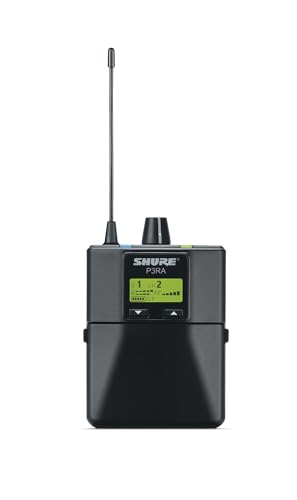
Shure P3RA Premium Wireless Bodypack Receiver for PSM300 Personal Monitoring Systems - G20 Band
$499.00A metal bodied bodypack receiver on its own, for adding a musician to an existing transmitter or replacing the plastic pack that got stood on.
Best for: Growing an in-ear system one musician at a time
Check price on AmazonWho should not buy this tier: Bands of eight or more where the frequency plan is already crowded and every new mix competes with a microphone channel.
Large room or multi-campus: $1,249 to $1,649
At this size the in-ear system and the microphone system are one spectrum problem, not two. A church with eight microphone channels and six in-ear packs is coordinating fourteen frequencies in a band that keeps shrinking, so tuning range becomes the specification worth paying for. The limiter in the bodypack matters too, and it is a hearing protection feature rather than a convenience.

Sennheiser Pro Audio Sennheiser ew IEM G4-A1 In Ear Monitor system Range (470-516Mhz), Single
$1,249.00 Specs and sizingA tuning range of about 46 MHz with up to 20 compatible channels, plus a proper limiter in the bodypack. When in-ear channels compete with microphones for spectrum, tuning range is what buys you room.
Best for: Bands large enough to strain the frequency plan
Check price on Amazon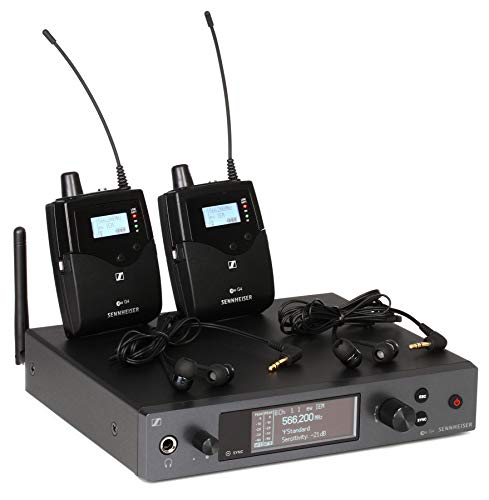
Sennheiser Pro Audio Sennheiser ew IEM G4-Twin-G in Ear Monitor System w/ 2 Belt Packs Range (566-608Mhz), Dual Beltpack
$1,649.00 Specs and sizingOne transmitter and two bodypacks, the efficient way to add a pair of musicians on a shared mix without another rack unit or another frequency.
Best for: Two musicians on one mix in a crowded RF plan
Check price on AmazonWho should not buy this tier: A church running three mixes in a quiet market. You would be paying for tuning range and channel density that a small frequency plan never calls on, and the same money would buy proper earphones for the whole band, which would be far more audible to the musicians.
The earphone is the system
This is the single most common mistake in church in-ear monitoring. A church spends $800 on a wireless system, hands the musician the cheapest earbuds in the building, and concludes that in-ears do not work. The transmitter delivers a mix to the ear; the earphone decides how much of the room arrives alongside it. Without isolation the musician hears the drum kit acoustically, turns the mix up to compete, and ends up louder in the ears than the wedge ever was in the room.
Around 37 dB of isolation, which is what a properly fitted sealed earphone provides, is what changes the platform. It also means the musician can run the mix quieter, which is the hearing protection argument. Budget the earphones as part of the system rather than as an accessory, and see earphones for in-ear monitoring for the detail.
In-ear systems compared
| Model | Price | Frequency band | Personal mixes | Wired | Battery life | Rated range |
|---|---|---|---|---|---|---|
| Galaxy Audio AS-1400 Wireless In-Ear Personal Monitor System, Code M (516 MHz - 558 MHz) | $449.99 | UHF | 1 | No | - | - |
| Shure PSM300 P3TR112GR Wireless in-Ear Personal Monitoring System with SE112 Earphones - G20 Band | $799.00 | UHF | 1 | No | 8 hours | 300 ft |
| Shure PSM300 P3TRA215CL Pro Wireless in-Ear Personal Monitoring System with SE215-CL Earphones | $989.00 | UHF | 1 | No | 8 hours | 300 ft |
| Shure PSM300 Twin Pack Pro Wireless in-Ear Monitor System - G20 | $1,539.00 | UHF | 1 | No | 8 hours | 300 ft |
| Sennheiser Pro Audio Sennheiser ew IEM G4-A1 In Ear Monitor system Range (470-516Mhz), Single | $1,249.00 | UHF | 1 | No | - | - |
In-ear monitors compete with your microphones for spectrum
An in-ear transmitter is a radio transmitter in the same UHF band as your wireless microphones, and it must be counted in the same frequency plan. Churches regularly discover this after buying, when a new in-ear pack knocks out a wireless handheld that worked fine for two years. The legal band for both is 470 to 608 MHz, and the bands from 617 to 652 MHz and 663 to 698 MHz are illegal to operate in, which shrinks the space every new channel has to fit into.
Run the total, microphones plus in-ears, through the wireless channel calculator before committing, and read the UHF working band for what is actually available at your address. Wired personal mixers sidestep the problem entirely, which is a large part of their appeal past about six mixes.
How we chose
We did not test these products in person and we never claim to. Picks are researched from manufacturer specification sheets and operator manuals, FCC rules where spectrum is involved, published standards, warranty terms, and the recurring themes in verified owner reviews. Every pick is matched to a real room size, seat count or input list rather than to a price bracket, and it is placed in the tier where its capability actually belongs. Where a product is wrong for most churches we say so on the page.
Sources
- FCC rules on legal operating bands for wireless microphones and in-ear monitor systems
- Shure published specifications for the PSM300 system, P3RA bodypack and SE215 earphones
- Sennheiser published specifications for the ew IEM G4 system
- Galaxy Audio published specifications for the AS-1400 system
Frequently asked questions
How many in-ear monitor mixes does a church band need?
Count independent mixes rather than musicians. Two backing vocalists who want the same balance share one mix and need only a second bodypack, while a drummer needing click and bass needs a mix of their own. A typical five piece worship band needs three or four independent mixes, which is three or four transmitters, frequencies and console outputs.
Are wireless in-ears or wired personal mixers better for a church?
Below about six mixes, wireless in-ears usually win because musicians can move and the entry cost is lower. Above six, wired personal mixers cost far less per position, use no radio spectrum and cannot drop out. The deciding question is movement: a vocalist who walks needs wireless, while a drummer, keyboard player or bassist never leaves their position.
Why do our in-ear monitors sound bad?
Usually because the earphones do not seal. Without isolation the musician hears the drums acoustically and turns the mix up to compete, which sounds harsh and loud at the same time. Properly fitted sealed earphones give around 37 dB of isolation, and that is what makes a quiet mix usable. The second common cause is a mono mix with everything in it.
Do in-ear monitors use the same frequencies as wireless microphones?
Yes, and this catches churches out regularly. In-ear transmitters operate in the same UHF band as wireless microphones and must be included in one combined frequency plan. A church with eight microphone channels and six in-ear packs is coordinating fourteen frequencies, not eight, inside the legal 470 to 608 MHz working band.
Are in-ear monitors safer for hearing than floor wedges?
They can be, and they are not automatically. A sealed earphone lets a musician work at a much lower level because the room is excluded, which is the hearing benefit. But it also removes any acoustic reference, so the musician sets their own exposure blind. Use the limiter in the bodypack, cap the transmitter output and treat rising levels as a mix problem.
Can two musicians share one in-ear transmitter?
Yes, provided they accept the same mix. A twin pack system pairs one transmitter with two bodypacks, which uses one frequency instead of two and costs far less than a second complete system. It suits two backing vocalists or a guitarist and bassist who want the same balance. Anyone needing a different balance needs their own transmitter.
Researched, not professional advice. This page is compiled from published manufacturer specifications, operator manuals, FCC rules, published standards and owner-review consensus, not hands-on testing. Sound system design, rigging loudspeakers overhead, and any electrical work are jobs for a qualified professional: have flown loudspeakers and their attachment points signed off by a structural engineer or a certified rigger, and have all wiring done by a licensed electrician to your local code. Wireless microphone rules change, so confirm the current FCC position before buying. As an Amazon Associate we earn from qualifying purchases.