Infrastructure
Best Direct Boxes for Churches
Quick answer
Most churches should buy the Radial ProDI at $134.99 for acoustic guitar and bass, and a passive Whirlwind IMP 2 at $79 for spares. A typical worship platform needs four direct box channels: acoustic guitar, bass, stereo keyboard and a playback laptop.
A direct box converts an unbalanced instrument output into a balanced microphone level signal that can travel a long cable without picking up hum. It is unglamorous, it is the difference between a clean acoustic guitar and a buzzing one, and churches consistently own too few of them. The choice between passive and active is not a quality ranking: it is a match to the pickup on the instrument plugged in. Size the input list with the mixer channel calculator, and see how to mic a worship band for where these sit in a full platform.
On this page
- Active or passive: which instrument needs which
- Small church: equipping the platform, $45.90 to $79 each
- Mid-size church: boxes that survive the rota, $134.99 to $209.99
- Permanent install or multi-campus: $159
- How many direct boxes does a church need?
- Direct boxes compared
- What usually goes wrong with direct boxes in church
Active or passive: which instrument needs which
This is the only technical decision on the page and it is straightforward. A passive direct box uses a transformer, needs no power, and presents a moderate input impedance. An active direct box uses a powered circuit, needs phantom power or a battery, and presents a very high input impedance that a weak passive pickup needs in order not to sound thin.
A passive direct box suits any instrument with a battery in it, while passive magnetic and piezo pickups need an active box to avoid sounding thin.
| Source | Pickup type | Direct box | Why |
|---|---|---|---|
| Acoustic guitar with a preamp | Active, battery powered | Passive | The instrument already buffers the signal |
| Acoustic guitar, piezo only | Passive piezo | Active | Piezo needs a very high input impedance |
| Bass, active electronics | Active | Passive | Output is already strong and low impedance |
| Bass, passive pickups | Passive magnetic | Active | A transformer loads the pickup and dulls it |
| Stereo keyboard | Line level | Passive, two channel | Line level needs no help, just balancing |
| Playback laptop or tablet | Line level, consumer | Passive, two channel | Balances the feed and breaks ground loops |
| Electric guitar amplifier | Speaker level | Microphone instead | Mic the cabinet, or use a dedicated speaker level box |
When in doubt, a battery in the instrument means passive is fine. The failure symptom of the wrong choice is a thin, weak acoustic guitar that no amount of equalisation fixes, which is a loading problem rather than a tone problem.
Small church: equipping the platform, $45.90 to $79 each
A small church needs two to four direct box channels and the honest advice is to buy quantity at this level rather than quality. Four working direct boxes beat two excellent ones and two instruments plugged into the wrong input. Both options here are reliable, and the cheaper active box also runs on a 9 volt battery, which is useful in a portable setup with no phantom power available.
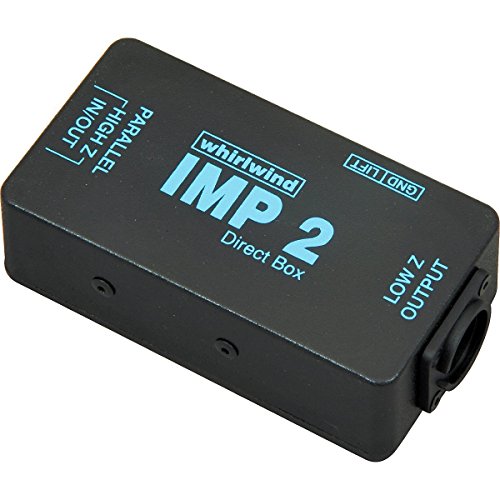
Whirlwind IMP 2 1-Channel Passive Instrument Direct Box
$79.00The workhorse passive direct box that has been in rental stock for decades. It does one thing, it is very hard to break, and at $79 a church can buy three.
Best for: A first direct box, or the spares in the road case
Check price on Amazon
Behringer Ultra-DI DI100 1-Channel Active Microphone/Instrument Direct Box
$45.90An active direct box that also runs on a 9 volt battery, at a price where a church can equip every position at once. The battery option matters for portable setups without phantom power.
Best for: Equipping a whole platform on a small budget
Check price on AmazonWho should not buy this tier: A permanent install where boxes on the floor become a trip hazard and a rack mounted unit is tidier.
Mid-size church: boxes that survive the rota, $134.99 to $209.99
The step up buys a better transformer and, more importantly, a chassis that survives being stood on, dropped and coiled into a case by a different volunteer every week. This is also the tier where a two channel box becomes the obvious purchase, because almost every church has a stereo keyboard or a playback laptop and running two single boxes for one instrument wastes floor space and cable.

Radial Pro DI Passive Direct Box
$134.99A passive box with a transformer that stays transparent and a chassis built for platform abuse. No power required and nothing to fail during a service.
Best for: Acoustic guitar, bass and anything with an active pickup
Check price on Amazon
Radial ProD2 Passive 2 Channel Direct Box
$209.99Two channels of the same passive design, which is exactly what a stereo keyboard or a playback laptop needs and what most churches actually plug in.
Best for: Stereo keyboards, playback tracks and a laptop feed
Check price on Amazon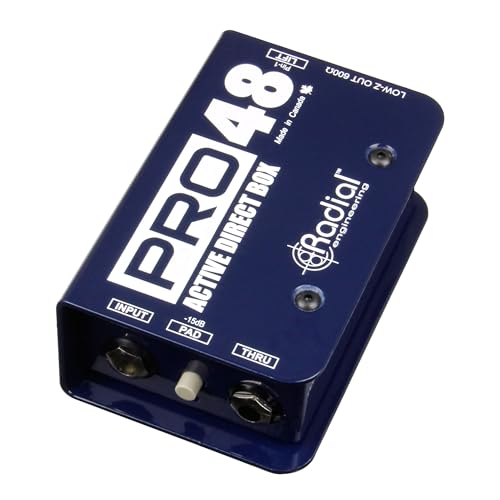
Radial Pro48 Active 48-Volt Compact Direct Box
$134.99An active box powered from console phantom, which suits the passive bass and piezo acoustic pickups that a transformer would load down and dull.
Best for: Passive bass pickups and piezo acoustic guitars
Check price on AmazonWho should not buy this tier: Permanent installations where every instrument position is already wired back to a rack.
Permanent install or multi-campus: $159
In a fully installed system the instrument feeds are already wired from platform floor boxes to the rack, and individual direct boxes on the floor become clutter that gets kicked, unplugged and lost. Consolidating them into a rack unit removes the boxes from the platform entirely, removes the power question, and means a volunteer setting up has nothing to plug in but the instrument itself.

Behringer DI4000 V2 4-channel Active Direct Box
$159.00Four active direct box channels in one rack unit, which gets the boxes off the platform floor and out from under people’s feet.
Best for: A permanent install where every instrument feed is wired to the rack
Check price on Amazon Radial ProD2 Passive 2 Channel Direct Box
$209.99Even a fully racked system usually keeps one or two boxes on the platform for guests and occasional instruments that were never wired in.
Best for: Guest musicians and unplanned inputs
Check price on AmazonWho should not buy this tier: A portable church that sets up and tears down weekly. A rack unit means the instrument cables must all reach the rack, which is exactly the flexibility a portable setup cannot afford. Individual boxes at each position are the right answer there, and the portable setup guide explains why.
How many direct boxes does a church need?
Count the instrument positions that plug in rather than get miked, then add one. A typical contemporary worship platform has an acoustic guitar, a bass, a keyboard needing two channels, and a laptop or tablet for playback needing two, which is six channels from four boxes if two of them are stereo units. Traditional services are simpler: often a single channel for a digital piano and nothing else.
The spare matters more than churches expect. Direct boxes disappear, get borrowed for a youth event and not returned, and occasionally fail. One unaccounted box in the cupboard is the difference between a guest musician plugging in during the welcome and a guest musician not being in the mix. Check the total input count against the console with the channel calculator before ordering.
Direct boxes compared
| Model | Price | Amplifier channels | Needs phantom power |
|---|---|---|---|
| Behringer Ultra-DI DI100 1-Channel Active Microphone/Instrument Direct Box | $45.90 | 1 | Yes |
| Whirlwind IMP 2 1-Channel Passive Instrument Direct Box | $79.00 | 1 | No |
| Radial Pro DI Passive Direct Box | $134.99 | 1 | No |
| Radial Pro48 Active 48-Volt Compact Direct Box | $134.99 | 1 | Yes |
| Radial ProD2 Passive 2 Channel Direct Box | $209.99 | 2 | No |
| Behringer DI4000 V2 4-channel Active Direct Box | $159.00 | 4 | Yes |
What usually goes wrong with direct boxes in church
The wrong type on a passive pickup, which produces a thin acoustic guitar that the operator then tries to fix with equalisation and never quite can. If a guitar with no battery sounds weak and lifeless, swap to an active box before touching the console.
Then there is phantom power. An active box needs it, and on some older analog consoles phantom power is a single global switch for a whole bank of inputs rather than per channel, so switching it on for the direct box also applies it to everything else plugged into that bank. Check what else is on the bank first. Finally, cable: a direct box output is a microphone level balanced signal and belongs on a proper XLR run, not a long unbalanced jack lead, which is covered in cables and snakes.
How we chose
We did not test these products in person and we never claim to. Picks are researched from manufacturer specification sheets and operator manuals, FCC rules where spectrum is involved, published standards, warranty terms, and the recurring themes in verified owner reviews. Every pick is matched to a real room size, seat count or input list rather than to a price bracket, and it is placed in the tier where its capability actually belongs. Where a product is wrong for most churches we say so on the page.
Sources
Frequently asked questions
What does a direct box actually do?
It converts an unbalanced, high impedance instrument output into a balanced, microphone level signal that can run a long cable to the console without picking up hum or losing high frequencies. It also isolates the instrument from the console electrically, which is why the ground lift switch can eliminate a mains hum caused by two pieces of equipment sharing different earth paths.
Do I need an active or a passive direct box?
If the instrument has a battery in it, a passive box is fine, because the instrument is already buffering the signal. If the pickup is passive, meaning a magnetic bass pickup or a bare piezo in an acoustic guitar, use an active box. An active box presents a much higher input impedance, which stops the pickup being loaded down and sounding thin.
How many direct boxes does a worship band need?
Count the positions that plug in rather than get miked, and add one spare. A typical contemporary platform has acoustic guitar, bass, a stereo keyboard and a stereo playback source, which is six channels covered by four boxes if two are two channel units. A traditional service often needs only one, for a digital piano.
Can I plug a keyboard straight into the mixer without a direct box?
Over a short distance with a balanced line input, sometimes yes. Over a typical platform to booth run on unbalanced cable, no: you will collect hum and lose top end. A two channel passive direct box costs about $210 and solves both, while also giving you a ground lift if the keyboard and the console disagree about earth.
Why does our acoustic guitar sound thin through the direct box?
Most often because a passive box is loading a passive piezo pickup. A piezo needs a very high input impedance to reproduce low frequencies properly, and a transformer does not provide it, so the result is thin and brittle regardless of equalisation. Swap to an active direct box powered from phantom and the body usually returns immediately.
Should direct boxes be on the platform or in the rack?
On the platform for a portable church, because instrument cables have to reach something nearby and flexibility matters more than tidiness. In the rack for a permanent install, where instrument positions are already wired to floor boxes and loose boxes on the floor only get kicked, unplugged and lost. A rack unit also removes the phantom power question from volunteers.
Researched, not professional advice. This page is compiled from published manufacturer specifications, operator manuals, FCC rules, published standards and owner-review consensus, not hands-on testing. Sound system design, rigging loudspeakers overhead, and any electrical work are jobs for a qualified professional: have flown loudspeakers and their attachment points signed off by a structural engineer or a certified rigger, and have all wiring done by a licensed electrician to your local code. Wireless microphone rules change, so confirm the current FCC position before buying. As an Amazon Associate we earn from qualifying purchases.