Instruments
Microphone for Bass Guitar
Quick answer
Take the bass with a direct box in almost every church. Use an active DI for a passive pickup and a passive DI for an active one. A cabinet microphone adds nothing a congregation will hear and adds a great deal of stage volume.
Bass is the easiest instrument on the platform to get right and one of the easiest to get wrong in a way nobody can diagnose. A direct box solves the capture problem completely, which means every remaining bass difficulty in a church is a room problem: low frequencies are long waves that interact with the building, and a room that booms at 80 Hz will boom whatever microphone or box you put in front of the instrument. This page covers the direct box choice, and then the far more useful subject of what to do about the room. See direct boxes for churches for the shortlist.
On this page
Which direct box for which bass
The same impedance rule as the acoustic guitar applies, and it catches people the same way. A passive pickup wants an active box, and an active bass with an onboard preamp and a battery is well served by a passive one.
A passive bass pickup needs an active DI, while an active bass with an onboard preamp works well through a passive transformer box.
| Bass | How to tell | Direct box | Why |
|---|---|---|---|
| Passive pickup | No battery compartment, volume and tone only | Active DI, phantom powered | A passive transformer loads the pickup down and thins the low end |
| Active pickup with a preamp | Battery door, often boost and cut controls | Passive DI | The onboard preamp has already buffered the signal |
| Bass amplifier with a DI output | XLR socket on the amplifier rear | None. Use the amplifier output. | Carries the player tone. Check pre or post EQ, and whether it is ground lifted. |
| Bass with an onboard XLR | XLR socket on the instrument | None | Straight to the console. Check whether it wants phantom power. |
If you use the amplifier direct output, find out whether it is taken before or after the amplifier EQ. A post EQ feed means the player controls your bass sound from the platform, which is either convenient or a problem depending on the player.
What to buy
Bass is the one instrument where a better direct box is genuinely audible, because the transformer in a passive box is handling a lot of low frequency energy and a cheap one will lose definition. This is a sensible place to spend.
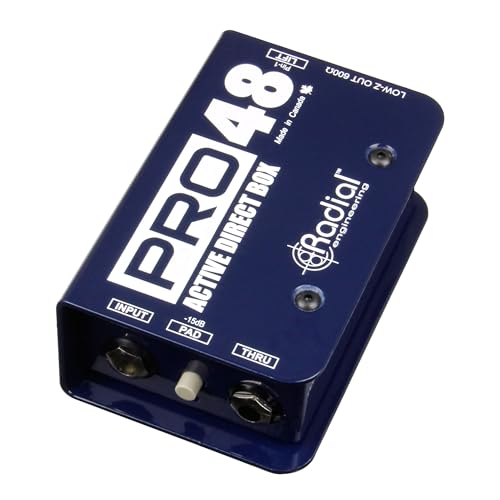
Radial Pro48 Active 48-Volt Compact Direct Box
$134.99An active direct box powered from the console phantom, which suits the passive pickups that a transformer would load down. This is what restores the low end on a passive instrument.
Best for: Passive bass pickups and piezo acoustic pickups
Check price on Amazon
Radial Pro DI Passive Direct Box
$134.99A passive direct box with a high grade transformer in a chassis built to be stood on. No power, nothing to fail mid-service, and the transformer handles bass energy without losing definition.
Best for: Bass with an onboard preamp, and anything with an active pickup
Check price on Amazon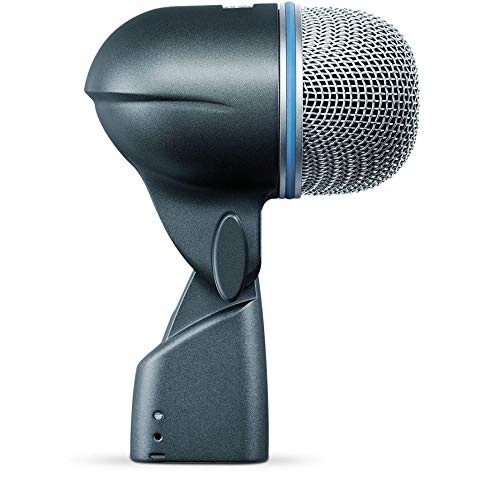
Shure BETA 52A Kick Drum Microphone - Supercardioid Dynamic Mic with High Output Neodymium Element, Locking Stand Adapter, Durabl Steel Mesh Grille and Shock Mount
$219.00A dedicated low frequency dynamic with a shaped low end and enough headroom that it never complains. The supercardioid pattern keeps some of the drum kit out, which matters at this position.
Best for: Kick drum, and a bass cabinet at a push
Check price on Amazon
Behringer Ultra-DI DI100 1-Channel Active Microphone/Instrument Direct Box
$45.90An active direct box that also runs on a 9 volt battery, at a price that lets a church equip every platform position at once. Not the last word in low end definition, but entirely serviceable.
Best for: A first bass DI on a tight budget
Check price on AmazonWhy a cabinet microphone rarely earns its channel
Miking a bass cabinet is standard practice in a recording studio and rarely worth it in a church. The direct signal is cleaner, more consistent and entirely under the operator control. A cabinet microphone adds the room, the drum kit and whatever else is on the platform, and it adds them at low frequencies where the microphone cannot reject anything, since directional patterns become progressively less directional as frequency falls.
It also encourages a louder bass cabinet, which is the thing you least want. Low frequency energy from a bass rig couples into the building structure and arrives everywhere, so a loud bass amplifier is the hardest source to keep off the platform microphones. If the player needs to feel the instrument, the better answers are a small cabinet at a modest level aimed at them, or in-ear monitoring with a tactile transducer, rather than a large rig that the whole building shares.
Channel setup and the room problem
Bass frequencies are long: a 60 Hz wave is nearly nineteen feet. In a sanctuary those waves interact with the walls to produce positions where the bass is loud and positions where it disappears, which is why the bass sounds different at the console than it does in the third row.
A high pass at 40 Hz removes energy below the instrument that only excites room modes and eats amplifier headroom.
| Setting | Starting point | Why |
|---|---|---|
| High pass filter | 40 Hz | Below the lowest note of a four string bass. Pure cost with no benefit. |
| Room mode cut | Narrow, wherever the room booms | Find it by walking the room, not by looking at the console |
| Low mid | 200 to 400 Hz, cut if woolly | Where bass and guitar fight for the same space |
| Definition | 700 Hz to 1 kHz, small boost | Where the note becomes audible on small speakers and in a stream |
| Compression | About 4:1, 3 to 6 dB | Evens out the player, and bass benefits more than most sources |
| Phantom power | On for an active DI, off for passive | An active box needs it. A passive one ignores it. |
Walk the room during rehearsal before touching the low EQ. If the bass is loud at the console and absent in the third row, the problem is a room mode and no channel setting fixes it for every seat at once.
What usually goes wrong
A passive bass through a passive direct box, producing a thin sound with no weight that gets treated with a low frequency boost, which then makes the room boom worse. No high pass filter, so subsonic energy eats amplifier headroom and muddies everything above it. A bass cabinet loud enough to be heard acoustically at the back, which puts low frequency energy into every open microphone on the platform.
And the most common of all: judging the bass from the console position, which in many churches is against a rear wall where low frequencies pile up and sound far louder than they do anywhere else in the room. Walk to the middle of the congregation during rehearsal and listen there. The fix for a genuine room problem is acoustic rather than electronic, which is covered in acoustic treatment for a sanctuary.
How we chose
We did not test these products in person and we never claim to. Picks are researched from manufacturer specification sheets and operator manuals, FCC rules where spectrum is involved, published standards, warranty terms, and the recurring themes in verified owner reviews. Every pick is matched to a real room size, seat count or input list rather than to a price bracket, and it is placed in the tier where its capability actually belongs. Where a product is wrong for most churches we say so on the page.
Sources
- Radial Engineering published specifications for the ProDI and Pro48 direct boxes
- Shure published specifications for the Beta 52A low frequency microphone
Frequently asked questions
Should a bass guitar be miked or taken direct in church?
Direct, in almost every church. A direct box gives a cleaner, more consistent signal entirely under the operator control, while a cabinet microphone adds the room and the drum kit at frequencies where microphones cannot reject anything. It also encourages a louder bass rig, which is the hardest source to keep off the platform microphones.
Which direct box does a bass guitar need?
An active DI for a passive bass and a passive DI for an active bass with an onboard preamp. The rule is about impedance rather than about which sounds better. Bass is also the instrument where transformer quality is genuinely audible, since a cheap passive box loses low frequency definition, so it is worth spending here.
Can we use the DI output on the bass amplifier?
Yes, and it often carries the tone the player intends. Find out whether the output is taken before or after the amplifier EQ. A post EQ feed means the player controls your bass sound from the platform, which is fine with a consistent musician and a problem with a rotating team. Check for a ground lift switch too.
Why does the bass sound loud at the console but disappear in the seats?
Room modes. Low frequency waves are long, a 60 Hz note is nearly nineteen feet, and they interact with the walls to create positions where bass piles up and positions where it cancels. Console positions against a rear wall are usually the worst place to judge it. Walk to the middle of the congregation during rehearsal.
What high pass filter should a bass channel use?
Around 40 Hz, which is below the lowest note of a standard four string bass. Everything under that is subsonic energy that eats amplifier headroom, excites room modes and muddies the frequencies above it without contributing any audible note. Five string basses reach lower, so drop the filter a little if one is in regular use.
Does the bass player still need an amplifier?
Only enough to feel the instrument, which is much less than most players use. A small cabinet at a modest level aimed at the player, or in-ear monitoring with a tactile transducer, gives them what they need without putting low frequency energy into the building and into every open microphone on the platform.
Researched, not professional advice. This page is compiled from published manufacturer specifications, operator manuals, FCC rules, published standards and owner-review consensus, not hands-on testing. Sound system design, rigging loudspeakers overhead, and any electrical work are jobs for a qualified professional: have flown loudspeakers and their attachment points signed off by a structural engineer or a certified rigger, and have all wiring done by a licensed electrician to your local code. Wireless microphone rules change, so confirm the current FCC position before buying. As an Amazon Associate we earn from qualifying purchases.