Prohibited bands
The 700 MHz Band: Prohibited Since 2010
Quick answer
Wireless microphones have been prohibited in the 698 to 806 MHz band since 2010. The spectrum carries public safety communications and mobile broadband. Any microphone system tuned into this range is scrap, and it is the oldest gear most likely to still be in a church cupboard.
This ban is older than most church sound systems and it still catches people out, because a wireless system from the 2000s can look and sound perfectly serviceable. The 700 MHz band was cleared of television in the digital transition and reassigned, with a large share going to public safety. That is the part worth pausing on: the neighbours here are emergency responders. Check any old system against the legal band list, and if you are clearing out a store cupboard, read this page before anything gets switched on.
On this page
What is in 698 to 806 MHz now
The band was divided between public safety and commercial mobile services when television vacated it. The exact block boundaries are a licensing matter rather than a church one, but the shape is worth knowing, because it explains why the prohibition is absolute rather than a matter of being careful.
The 698 to 806 MHz band carries public safety communications and licensed mobile broadband, which is why no microphone operation is permitted at any power.
| Occupant | What it carries | Why microphones are excluded |
|---|---|---|
| Public safety | Police, fire and emergency medical radio, including a nationwide broadband network | Safety of life communications. Interference here is not a licensing dispute. |
| Mobile carriers | Licensed cellular broadband | Licensed exclusive spectrum. Unlicensed transmission is not permitted. |
| Wireless microphones | Not permitted since 2010 | No low power allowance, no waiver route, no exception for occasional use. |
The ban dates from the FCC decision that ended wireless microphone operation in this band in 2010, well before the 600 MHz incentive auction that closed 617 to 652 and 663 to 698 MHz.
How to recognise 700 MHz gear
The giveaway is age combined with a tuning range printed in the 700s. Systems sold before 2010 commonly covered 700 to 800 MHz because the band was quiet and the antennas were pleasantly short. If the receiver rear panel says anything beginning with a 7, the system is out. A frequency on the display in the 740s or 780s is the same answer.
A second giveaway is a rack that was installed once and never revisited. A church that has not changed its wireless since the 2000s may be running 700 MHz systems without anyone in the current volunteer team knowing what the numbers mean, simply because they still work well enough that nobody asked. If that describes your rack, this is the week to read the labels.
The two prohibitions are different, and both apply
Churches often merge the 2010 ban and the 600 MHz repack into one memory. They were separate events, they closed different spectrum, and gear can fall foul of either.
The 2010 closure took 698 to 806 MHz, and the later incentive auction took 617 to 652 and 663 to 698 MHz, so together they removed everything above 616 MHz.
| Closure | Range removed | Who got it | Typical age of affected gear |
|---|---|---|---|
| 2010 decision | 698 to 806 MHz | Public safety and mobile broadband | Systems sold before 2010 |
| 600 MHz incentive auction and repack | 617 to 652 and 663 to 698 MHz | Mobile carriers | Systems sold before the transition ended in 2020 |
| Never available | 608 to 614 MHz, TV channel 37 | Radio astronomy and medical telemetry | Any age |
The practical consequence of stacking all three is a single simple rule for a church planner: treat 616 MHz as the top of the usable television spectrum and check every frequency against it.
What to replace it with
A system old enough to be in this band is old enough that its capsules, batteries and body pack accessories are also at the end of the road. Replace by channel rather than by system, decide analog or digital on channel count, and put the spare capsule money in the budget at the same time.
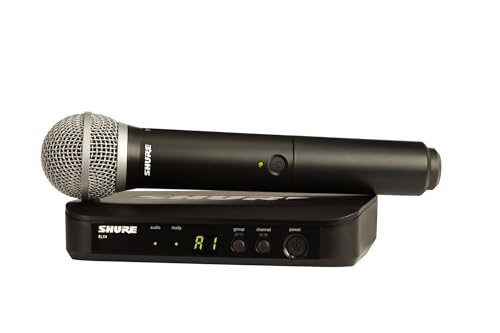
Shure BLX24/PG58 Wireless Vocal Microphone System - H10 Band
$329.00 Specs and sizingThe most affordable Shure UHF system worth putting in a sanctuary, on the same receiver platform as the more expensive versions so a capsule upgrade later is just a capsule.
Best for: A one channel replacement on a very tight budget
Check price on Amazon
Shure BLX24/SM58 Wireless Microphone System - 14-Hour Battery Life, 300 ft Range, UHF
$389.00 Specs and sizingThe capsule every visiting musician already knows on a receiver with up to twelve compatible channels per band. This is where most churches replacing legacy wireless land.
Best for: Two to four analog channels in a 100 to 500 seat room
Check price on Amazon
Sennheiser Pro Audio XSW 1-825 DUAL-A Channel Wireless Microphone System
$649.00 Specs and sizingTwo channels in one receiver at close to the price of one and a half, which is usually the cheapest honest way to replace a pair of dead channels at once.
Best for: Replacing two handhelds together
Check price on AmazonWhat to do with the old rack
Keep the capsules if they fit anything current, keep the rack screws and the rack itself, and dispose of the radios through electronics recycling. Do not sell them, do not donate them to another church, and do not put them on an auction site with a note saying the buyer should check their local rules. The manufacturer rebate programmes that once covered this transition have long closed.
While the rack is open, it is worth planning the replacement properly rather than swapping box for box. Count the positions that genuinely move, price the batteries with the wireless battery calculator, and check whether your channel count has quietly grown past the point where analog is still the right answer. The wireless channel count chart makes that decision in one look.
How we chose
We did not test these products in person and we never claim to. Picks are researched from manufacturer specification sheets and operator manuals, FCC rules where spectrum is involved, published standards, warranty terms, and the recurring themes in verified owner reviews. Every pick is matched to a real room size, seat count or input list rather than to a price bracket, and it is placed in the tier where its capability actually belongs. Where a product is wrong for most churches we say so on the page.
Sources
- FCC guidance for wireless microphone users
- FCC Part 15 rules for low power wireless microphones in the TV bands
- Published manufacturer tuning range specifications for legacy and current wireless platforms
Frequently asked questions
When did the 700 MHz band close to wireless microphones?
In 2010, when the FCC ended wireless microphone operation in 698 to 806 MHz following the digital television transition. The spectrum was reassigned to public safety communications and licensed mobile broadband. The closure predates the 600 MHz incentive auction by several years and is a separate rule, so gear can fall foul of either or both.
Our old system still works. Can we keep using it?
No. Working and legal are different questions, and this band carries emergency responder communications. If the tuning range printed on the receiver reaches above 698 MHz, the system must stop transmitting. Owning it is not the offence, so there is no urgency to bin it today, but there is no lawful way to keep it in the Sunday rota.
How do I tell whether our wireless is in the 700 MHz band?
Read the tuning range printed on the receiver rear panel, in megahertz. Anything beginning with a 7 is out. Then power the receiver up and read the frequency on the display: a number in the 740s or 780s confirms it. Check the transmitters too, since body packs and handhelds carry their own ranges that must match.
Can we sell or donate 700 MHz wireless systems?
You should not. Passing the equipment on simply moves the problem to a church with less information than you have, and the manufacturer trade-in programmes that once covered this transition have closed. Keep any capsules or accessories that fit current systems from the same manufacturer, and recycle the radios through an electronics disposal route.
Is 700 MHz gear different from 600 MHz gear?
Different rule, same outcome. The 2010 decision closed 698 to 806 MHz, and the later incentive auction closed 617 to 652 and 663 to 698 MHz. Between them they removed everything above 616 MHz, so the practical planning rule for a church is to treat 616 MHz as a hard ceiling and check every frequency against it.
What should we budget to replace a legacy wireless rack?
Between about $330 and $800 per channel for analog or entry digital, plus batteries and a spare capsule per position. Replace by channel rather than by system, because a rack old enough to sit in this band usually has worn capsules and discontinued accessories as well. Settle the channel count before shortlisting any product.
Researched, not professional advice. This page is compiled from published manufacturer specifications, operator manuals, FCC rules, published standards and owner-review consensus, not hands-on testing. Sound system design, rigging loudspeakers overhead, and any electrical work are jobs for a qualified professional: have flown loudspeakers and their attachment points signed off by a structural engineer or a certified rigger, and have all wiring done by a licensed electrician to your local code. Wireless microphone rules change, so confirm the current FCC position before buying. As an Amazon Associate we earn from qualifying purchases.