Instruments
Microphones for Cajon and Percussion
Quick answer
Mic a cajon with one microphone at the rear port, either a boundary condenser laid behind it or a kick drum dynamic on a short stand. Hand percussion needs a clip-on condenser or a shared overhead rather than a channel each.
A cajon is the most common percussion instrument in a church that has moved away from a full drum kit, and it is a genuinely good answer: it produces roughly the dynamic range a small room needs without setting the 105 to 120 dBA floor an acoustic kit does. Miking it is straightforward once you understand that it is two instruments in one box, a bass note from the port and a slap from the front face, and that you usually have to choose which one to favour. Hand percussion is a different problem, mostly about resisting the urge to give every instrument its own channel.
On this page
Where to put the cajon microphone
The cajon radiates low frequencies from the rear port and the slap from the front face where the player strikes it. A single microphone has to be placed to balance those, and the position controls that balance far more than EQ does.
A microphone at the rear port, a few inches out, gives the most usable balance of bass and slap for a single channel.
| Position | Distance | Balance | Use when |
|---|---|---|---|
| Boundary microphone on the floor behind | Just behind the port | Strong bass, natural slap, no stand | The tidiest church answer. Start here. |
| Dynamic at the rear port | 3 to 6 inches out | Most bass, less slap detail | The cajon needs to carry the low end of the band |
| Angled at the lower front edge | 6 to 12 inches | More slap, less bass | A room that already has plenty of low end |
| Overhead, above the player | 2 to 3 feet | Natural but distant, picks up the room | A quiet acoustic service only |
| Two microphones, port and face | Both | Full control, two channels, phase risk | A large room with an experienced operator |
If you use two microphones, check polarity between them before doing anything else. Front and rear capsules on the same instrument are frequently out of phase with each other, which cancels exactly the low end you added the second microphone to capture.
What to buy
A cajon is a low frequency instrument played with bare hands, so the microphone needs low end extension and enough headroom for a sharp transient. The same microphones that suit a kick drum suit a cajon.

Shure BETA 91A Half-Cardioid Condenser Kick Drum Microphone
$269.00A boundary condenser that lies flat on the floor behind the instrument, which means no stand on a crowded platform and nothing for the player to knock. It captures the port output naturally.
Best for: Cajon on a tight platform, and kick drum
Check price on Amazon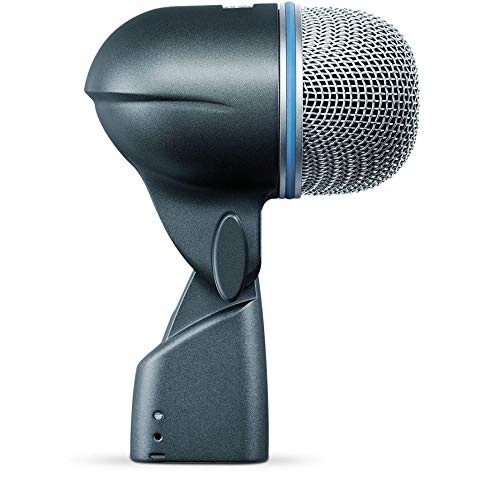
Shure BETA 52A Kick Drum Microphone - Supercardioid Dynamic Mic with High Output Neodymium Element, Locking Stand Adapter, Durabl Steel Mesh Grille and Shock Mount
$219.00A dedicated low frequency dynamic with a shaped low end and plenty of headroom, on a short boom aimed at the port. The supercardioid pattern keeps the rest of the platform out.
Best for: A cajon that has to carry the low end against a band
Check price on Amazon
Audio-Technica PRO 35 Cardioid Condenser Clip-on Instrument Microphone
$159.00A clip-on condenser that mounts to the rim of a drum or the shell of a conga, which removes a stand from a crowded platform and follows the instrument if it moves.
Best for: Congas, bongos and toms where stands are in the way
Check price on Amazon
Shure SM57 Pro XLR Dynamic Instrument Microphone
$109.00Works on the front face of a cajon, on congas and on almost any percussion instrument at close range. Not the best at any of them, and hard to beat for one microphone that has to do everything.
Best for: A single percussion channel that changes instrument weekly
Check price on AmazonHand percussion without a channel for every shaker
The instinct when a percussionist arrives with a table of instruments is to give each one a microphone. Resist it. A shaker, a tambourine and a triangle are all quiet, high frequency instruments that a single overhead condenser picks up perfectly well, and each additional open microphone costs gain before feedback across the whole system for a source that occupies a few seconds of the service.
One overhead condenser above the percussion table, high passed at around 300 Hz, covers everything on it. A clip-on condenser is worth adding only for an instrument that is played continuously and needs to be present in the mix, such as congas in a Latin arrangement. For everything else, the overhead is both cheaper and better, because a shaker close miked sounds unnaturally large and a tambourine close miked is painfully bright.
Channel setup
A cajon channel wants roughly what a kick drum channel wants, with rather more attention to the midrange where the slap lives.
High pass a cajon at 50 Hz and percussion overheads at 300 Hz, because the two have almost no useful overlap.
| Channel | High pass | Key moves | Why |
|---|---|---|---|
| Cajon, single microphone | 50 Hz | Boost 70 to 100 Hz for bass, 2 to 4 kHz for slap, cut 300 to 500 Hz | The classic scoop that separates the two voices of the instrument |
| Congas and bongos | 80 to 100 Hz | Boost 200 Hz for tone, 4 kHz for hand attack | Tuned drums need their fundamental left intact |
| Percussion overhead | 300 Hz | Very little else | Shakers and tambourines are all high frequency content |
| Compression | About 4:1 on cajon, light elsewhere | A cajon has a very wide dynamic range between bass and slap | |
| Gate | Usually none | Percussion transients trip gates awkwardly and lose the quiet strokes |
Mute the percussion overhead when nothing is being played on the table. It is a condenser pointed at a loud platform and it contributes bleed and loop gain the rest of the time.
What usually goes wrong
A microphone too close to the port, which produces a boomy one note thud with no slap and gets EQ treatment that removes what little definition remained. Two microphones on a cajon with no polarity check, cancelling the low end they were added to capture. A channel for every instrument on the percussion table, adding open microphones for sources that appear briefly. And a cajon mic on a tall boom that the player knocks every time they reach for a shaker.
The other frequent issue is expecting a cajon to replace a drum kit in level as well as in role. It will not: a cajon is a quieter instrument, which is usually the point, and pushing its channel hard enough to match a kit brings the whole platform up with it through the open microphones. If the arrangement genuinely needs kit level, the answer is a kit with a shield rather than a cajon pushed beyond what it is. See the drum kit position.
How we chose
We did not test these products in person and we never claim to. Picks are researched from manufacturer specification sheets and operator manuals, FCC rules where spectrum is involved, published standards, warranty terms, and the recurring themes in verified owner reviews. Every pick is matched to a real room size, seat count or input list rather than to a price bracket, and it is placed in the tier where its capability actually belongs. Where a product is wrong for most churches we say so on the page.
Sources
- Shure published specifications for the Beta 91A, Beta 52A and SM57 microphones
- Audio-Technica published specifications for the PRO 35 clip-on condenser microphone
Frequently asked questions
How do you mic a cajon?
One microphone at the rear port is the standard approach, either a boundary condenser laid on the floor behind the instrument or a kick drum dynamic on a short boom three to six inches out. The boundary option is tidier on a crowded platform because there is no stand for the player to knock.
Should a cajon have two microphones?
Only in a large room with an experienced operator. Two microphones, one at the port and one at the front face, give full control over the balance of bass and slap. They also introduce a phase relationship that frequently cancels the low end, so check polarity between them before anything else if you go this route.
Does every percussion instrument need its own microphone?
No, and giving them one is a common mistake. A shaker, tambourine and triangle are quiet high frequency instruments that a single overhead condenser above the percussion table covers well. Each extra open microphone costs gain before feedback across the whole system for a source used for seconds at a time.
Why does our cajon sound like a boomy thud?
The microphone is too close to the port, capturing only the low frequency output and none of the slap from the front face. Move it further out, or angle it toward the lower front edge of the instrument. A cut around 300 to 500 Hz and a lift around 2 to 4 kHz brings the slap back.
Can a cajon replace a drum kit in a church?
In role yes, in level no, and that is usually the point. A cajon is a quieter instrument, which is why churches choose it, so do not push its channel to match a kit. If the arrangement genuinely needs kit level and impact, a shielded acoustic kit or an electronic kit is the honest answer.
What microphone works for congas?
A clip-on condenser mounted to the shell is the practical choice, because it removes a stand from a crowded platform and follows the instrument if the player moves it. High pass around 80 to 100 Hz to leave the fundamental intact, and lift around 4 kHz for the hand attack.
Researched, not professional advice. This page is compiled from published manufacturer specifications, operator manuals, FCC rules, published standards and owner-review consensus, not hands-on testing. Sound system design, rigging loudspeakers overhead, and any electrical work are jobs for a qualified professional: have flown loudspeakers and their attachment points signed off by a structural engineer or a certified rigger, and have all wiring done by a licensed electrician to your local code. Wireless microphone rules change, so confirm the current FCC position before buying. As an Amazon Associate we earn from qualifying purchases.