Livestream video
Best Audio Interfaces for Church Livestream
Quick answer
An audio interface taking a line feed from the mixing console fixes the biggest problem in church livestreaming for under $250. The Focusrite Scarlett 2i2 4th Gen at $224.99 is the one to buy, and the Behringer UMC202HD at $86.90 does the same job on a smaller budget.
The biggest quality problem in church livestreaming is audio, not video, and it is the cheapest one to solve. A microphone on a camera thirty feet from the platform hears the room: the reverberation, the congregation singing, the air handling, the platform wedges and, somewhere underneath all of it, the person speaking. No camera upgrade improves that, because the camera is not the problem. An audio interface takes the mix the sound team already built, at line level, straight into the streaming computer, and the stream immediately sounds like the console instead of like the building. This is the highest value purchase in the whole livestream category and it costs less than a microphone stand and a cable for most of the options below. Specifications are from published manufacturer figures.
On this page
- Where the stream audio comes from, and what each option sounds like
- Why the house mix is not the right mix for the stream
- Small church: stop streaming the camera microphone, $86.90 to $97.98
- Mid-size church: a proper stream feed, $224.99 to $299.99
- Large room or a produced archive: $569.99
- The interfaces compared
- Hum, ground loops and the other things that go wrong
Where the stream audio comes from, and what each option sounds like
This is the whole argument in one table. The differences here are not subtle improvements, they are the difference between a stream people watch and a stream people apologise for. Note where the money sits: the jump from unusable to good costs $86.90, and everything after that is refinement.
Moving from a camera microphone to a console feed through an $86.90 interface is the single largest quality improvement available in church livestreaming.
| Audio source | Cost | What the viewer hears | Verdict |
|---|---|---|---|
| Camera on-board microphone | $0 | The room: reverberation, congregation, air handling, wedges | Unusable for anything with music in it |
| A microphone in the room into an interface | $86.90 plus a mic | A better version of the same room problem | Still wrong, just more deliberately |
| Console main output into an interface | $86.90 to $224.99 | The house mix, clean and intelligible | Good, and the right first step |
| A dedicated stream mix from an aux or matrix | $299.99 | A balance built for headphones rather than a room | Best for most churches |
| Multitrack recording, remixed afterwards | $569.99 | Whatever you choose to make of it later | Only for churches producing an edited archive |
Prices are for the interface only. A console output to interface connection needs two cables, and a line level output going into a microphone input needs a pad or the input switched to line, or it will distort. Figures are current catalog prices researched from published listings.
Why the house mix is not the right mix for the stream
A house mix is built for a room that already contains sound. The drums are audible acoustically, the guitar amplifier is in the room, the congregation is singing, and the operator only amplifies what needs help. Send that mix to a stream and the viewer at home hears the vocals and the keys clearly and almost nothing of the drums or the congregation, because those were never in the console to begin with.
The answer is a separate mix built on an aux or a matrix output, which is why a four input interface earns its extra money: the stream gets its own balance and its own level, independent of what happens in the room. It usually means adding a little more of the acoustic sources, more congregation if you have room microphones, and a little less of whatever was loudest in the building. Mono is also perfectly acceptable, and frequently better, because most viewers are on a phone speaker. The whole approach is set out in how to mix for livestream, and the physical chain in church livestream audio setup.
Small church: stop streaming the camera microphone, $86.90 to $97.98
If your stream currently carries camera audio, this tier is the most valuable hundred dollars the church will spend on AV this year, and it is not close. Two channels, a line feed from the console main outputs, and a USB cable to the streaming computer. It takes an afternoon and the difference is obvious in the first thirty seconds of the next service.

Behringer UMC202HD Audiophile 2x2, 24-Bit/192 kHz USB Audio Interface with Midas Mic Preamplifiers
$86.90Two channels with Midas preamps at $86.90 and 24 bit, 192 kHz conversion. It removes every excuse for streaming a camera microphone and costs less than a decent HDMI cable.
Best for: A first stream audio chain on the tightest possible budget
Check price on Amazon
Behringer UMC204HD Audiophile 2x4, 24-Bit/192 kHz USB Audio/MIDI Interface with Midas Mic Preamplifiers
$97.98The same interface with four outputs, so the streaming computer can also feed a confidence monitor, a foldback headphone or a separate recorder.
Best for: A small stream setup that needs a second output for monitoring
Check price on AmazonWho should not buy this tier: Churches that want the stream to carry a mix independent of the house, which needs the extra inputs and outputs of the next tier.
Mid-size church: a proper stream feed, $224.99 to $299.99
At this size the stream deserves its own mix and its own monitoring, and the interface is the thing that makes both possible. Four inputs and four outputs means the stream takes a dedicated aux or matrix feed from the console, and a return path comes back for talkback to the camera operator or a confidence feed for whoever is watching the stream at the back of the room.
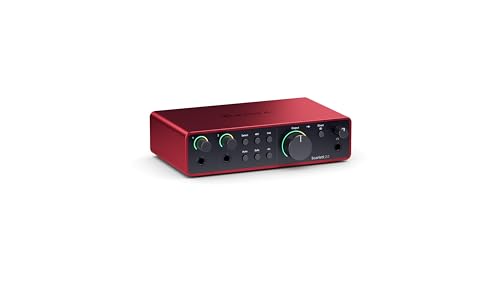
Focusrite Scarlett 2i2 4th Gen USB-C Audio Interface
$224.99 Specs and sizingTwo clean channels over USB-C, bus powered, with controls simple enough that a volunteer cannot set them wrongly. The default answer for a stereo console feed.
Best for: A stereo line feed from the console into the streaming computer
Check price on Amazon
Focusrite Scarlett 4i4 4th Gen USB-C Audio Interface
$299.99 Specs and sizingFour in and four out, which is what a stream mix on an aux or matrix actually needs, plus a return path for talkback or a confidence monitor.
Best for: A stream that needs its own balance rather than a copy of the house mix
Check price on AmazonWho should not buy this tier: Churches recording the service in multitrack to remix afterwards, where the input count is the limiting factor.
Large room or a produced archive: $569.99
One reason to be here, and it is not sound quality on the live stream: input count. Eighteen inputs means the whole service can be recorded as separate tracks, so the archive, the podcast and the clips are all remixed properly afterwards rather than being stuck with whatever balance went out live. That is a genuine production capability and it needs somebody willing to do the work during the week.

Focusrite Scarlett 18i16 4th Gen USB-C Audio Interface
$569.99 Specs and sizingEighteen inputs and sixteen outputs in one rack unit, enough to record every channel of a typical church service separately and remix the stream audio afterwards rather than living with what went out.
Best for: Churches producing a polished archive, a podcast or clips from the Sunday recording
Check price on Amazon Focusrite Scarlett 4i4 4th Gen USB-C Audio Interface
$299.99 Specs and sizingMany churches at this level run a simple dedicated interface for the live stream and keep the large one for recording, so a problem with the recording rig cannot take the live stream down with it.
Best for: Keeping the live stream path separate from the multitrack recording path
Check price on AmazonWho should not buy this tier: A church streaming a service that nobody re-edits. Eighteen inputs is a recording studio capability, and if the recording is never opened again it is $345 more than the 4i4 for a feature that goes unused. A church at that point should buy a second camera instead.
The interfaces compared
| Model | Price | USB inputs | USB outputs | Sample rate | Mic preamps |
|---|---|---|---|---|---|
| Behringer UMC202HD Audiophile 2x2, 24-Bit/192 kHz USB Audio Interface with Midas Mic Preamplifiers | $86.90 | 2 | 2 | 192 kHz | 2 |
| Behringer UMC204HD Audiophile 2x4, 24-Bit/192 kHz USB Audio/MIDI Interface with Midas Mic Preamplifiers | $97.98 | 2 | 4 | 192 kHz | 2 |
| Focusrite Scarlett 2i2 4th Gen USB-C Audio Interface | $224.99 | 2 | 2 | 192 kHz | 2 |
| Focusrite Scarlett 4i4 4th Gen USB-C Audio Interface | $299.99 | 4 | 4 | 192 kHz | 2 |
| Focusrite Scarlett 18i16 4th Gen USB-C Audio Interface | $569.99 | 18 | 16 | 192 kHz | 8 |
Hum, ground loops and the other things that go wrong
Hum on a stream is nearly always a ground loop, created when the console and the streaming computer are on different electrical circuits and the audio cable joins their grounds. An audio interface is not an isolator and will not fix it. The proper fixes are a transformer isolated feed, a direct box with a ground lift in the path, or getting the console and the streaming computer onto the same circuit, which is a question for electrical planning for church AV rather than for a settings menu. Never solve it by lifting a mains earth pin, which is dangerous and illegal.
The other recurring faults are simpler. Nobody is monitoring the stream audio, so a muted channel or a dead feed goes unnoticed for twenty minutes: put a headphone on the return output, or a phone on the actual stream at the back of the room. Levels set once and never checked, so a quieter service clips or disappears. And the sample rate mismatch between the interface and the streaming software, which produces slow drift between audio and video across a long service. Set both to 48 kHz and leave them. For what the rest of the chain should look like, see the starter livestream system.
How we chose
We did not test these products in person and we never claim to. Picks are researched from manufacturer specification sheets and operator manuals, FCC rules where spectrum is involved, published standards, warranty terms, and the recurring themes in verified owner reviews. Every pick is matched to a real room size, seat count or input list rather than to a price bracket, and it is placed in the tier where its capability actually belongs. Where a product is wrong for most churches we say so on the page.
Sources
Frequently asked questions
Why does our church livestream audio sound so bad?
Because it is almost certainly coming from a microphone on the camera, which hears the entire room rather than the mix: reverberation, the congregation, air handling and platform monitors all at similar levels. The fix is an audio interface taking a line level feed from the mixing console into the streaming computer, which costs between $86.90 and $299.99 and is the single biggest improvement available.
What audio interface should a church use for livestreaming?
The Focusrite Scarlett 2i2 4th Gen at $224.99 for most churches, which handles a stereo feed from the console over USB-C and is bus powered. On a tighter budget the Behringer UMC202HD at $86.90 does the same job. Step up to a four input model if you want the stream to carry its own mix from a console aux or matrix output.
Should the livestream use the house mix or its own mix?
Its own mix, if the console can provide one. A house mix only amplifies what the room needs help with, so drums, guitar amplifiers and the congregation are often barely in it, and a viewer at home hears vocals over near silence. A separate aux or matrix mix lets you add those sources back for the stream without changing anything in the room.
Can we plug the console output straight into the interface?
Yes, provided the interface input is switched to line rather than microphone. A console output is line level, which is far hotter than a microphone signal, and feeding it into a microphone input without a pad produces distortion that volunteers then try to fix by turning the gain down. Set the input to line, then set gain so peaks sit 6 to 10 dB below the top of the meter.
Why is there a hum on our livestream audio?
Almost always a ground loop, caused by the console and the streaming computer being on different electrical circuits with an audio cable joining their grounds. An interface will not fix it. Use a transformer isolated feed or a direct box with a ground lift, or get both devices onto the same circuit. Never lift a mains earth pin, which is both dangerous and against code.
Do we need a mixer as well as an audio interface?
If the church already has a mixing console, no. The interface is only the bridge between the console and the computer. A church with no console at all needs one first, because an interface with two preamps cannot mix a service. The exception is a very small setup of one or two microphones, where an interface alone can genuinely carry a simple spoken service.
Researched, not professional advice. This page is compiled from published manufacturer specifications, operator manuals, FCC rules, published standards and owner-review consensus, not hands-on testing. Sound system design, rigging loudspeakers overhead, and any electrical work are jobs for a qualified professional: have flown loudspeakers and their attachment points signed off by a structural engineer or a certified rigger, and have all wiring done by a licensed electrician to your local code. Wireless microphone rules change, so confirm the current FCC position before buying. As an Amazon Associate we earn from qualifying purchases.