Rooms beyond the sanctuary
Overflow Room Audio and Video
Quick answer
A 30 by 24 foot overflow room with a 9 foot ceiling needs 12 ceiling speakers and one 150 watt 70 volt amplifier, fed from a direct video path rather than the livestream. A stream encoder runs seconds behind the room, so lips and audio never line up.
An overflow room is the cheapest seat a church will ever add, and it is routinely ruined by one decision: feeding it from the livestream. The stream is the convenient feed, it is already running, and it is seconds behind the room. In a space where people can hear the sanctuary through a door, or walk in and out during the service, being seconds late is worse than having no feed at all.
So the order of decisions is video path first, then loudspeakers, then delay. Get your speaker count from the ceiling speaker spacing calculator once the video path is settled, because the room layout often changes when you discover where the cable has to run.
On this page
Which video path should an overflow room use?
Latency is the whole decision. A direct baseband path adds a few frames. A network or encoder path adds anything from a fraction of a second to several seconds, and it is not stable, which is worse than being consistently late.
A direct HDMI or SDI run adds only a frame or two of delay, while the livestream path an encoder produces typically runs 2 to 30 seconds behind the room and is unusable for overflow.
| Path | Typical latency | Distance limit | Suitable for overflow? | Notes |
|---|---|---|---|---|
| Direct HDMI | Low, a frame or two | About 50 ft without an extender | Yes | Simplest path. Use a powered extender over copper for longer runs. |
| SDI over coax | Low, a frame or two | Hundreds of feet | Yes, the best answer | Locking connectors, long runs, broadcast standard. Needs SDI outputs. |
| HDBaseT over Cat cable | Low, a frame or two | Up to about 300 ft | Yes | Uses structured cabling you may already have in the wall. |
| NDI or network video | Fraction of a second to seconds, variable | Anywhere on the LAN | Only with a low-latency mode and a dedicated network | Convenient and fragile. Never share it with the guest Wi-Fi. |
| Livestream via the platform | 2 to 30 seconds, variable | Anywhere | No | Never use the public stream for a room inside the same building. |
Latency figures are the general behaviour of each transport class rather than a specification for any one device. Check the published figure for the specific extender, encoder or decoder you are buying, because low-latency modes vary widely between products.
When the overflow room needs audio delay
There are two different delay problems in an overflow room and they pull in opposite directions.
The first is lip sync. If the video path adds delay, the audio must be delayed to match it, or the preacher's voice arrives before their mouth moves. Most switchers and processors carry an audio delay control for exactly this. Set it by watching the screen and increasing delay until the lips line up.
The second is acoustic spill. If the overflow space opens onto the sanctuary, a cry room with a window, a narthex with doors propped open, or a side transept, people in that space hear the main system directly as well as through the local speakers. Sound travels at about 0.889 milliseconds per foot at 68 degrees Fahrenheit, so a listener 90 feet further from the main system than from the local speaker needs about 80 milliseconds of delay on the local speaker, plus a Haas offset of 10 to 15 milliseconds on top.
That Haas offset is deliberate. Arriving slightly late makes the ear localise the sound at the main system rather than at the ceiling speaker directly overhead, so the local system disappears and the room still feels connected to the sanctuary. Setting the delay to the exact path difference makes the local speaker audible as its own source, which is the thing you were trying to avoid. Work out your own figure with the delay speaker timing calculator, and read under-balcony delay speakers for the same principle applied to a balcony.
A fully enclosed overflow room with a solid wall between it and the sanctuary has no acoustic spill, so it needs lip sync delay only. Check before you assume.
Speakers and amplifier for the overflow room
Overflow is a speech room. It carries a preaching voice, a music feed and nothing that needs to be felt. That makes it the ideal distributed ceiling application, which is the opposite of the answer for a youth room with a band.
A 30 by 24 foot overflow room with a 9 foot ceiling takes 12 ceiling speakers at edge to edge spacing, a 96 watt tap load, and a single 150 watt 70 volt amplifier.
| Room | Ceiling | Pattern | Spacing | Speakers | Tap load at 8 W | Amplifier |
|---|---|---|---|---|---|---|
| 24 by 20 ft cry room | 8 ft | Edge to edge | 8.0 ft | 12 | 96 W | 150 W |
| 30 by 24 ft overflow | 9 ft | Edge to edge | 10.0 ft | 12 | 96 W | 150 W |
| 30 by 24 ft overflow | 9 ft | Minimum overlap | 7.1 ft | 20 | 160 W | 200 W |
| 40 by 28 ft overflow | 10 ft | Edge to edge | 12.0 ft | 12 | 96 W | 150 W |
| 40 by 28 ft overflow | 10 ft | Minimum overlap | 8.5 ft | 20 | 160 W | 200 W |
| 60 by 40 ft fellowship overflow | 12 ft | Minimum overlap | 11.3 ft | 24 | 192 W | 300 W |
Amplifier sizes apply the 80 percent rule to the total tap load and round up to a size that is sold. Minimum overlap is the right choice where the preaching voice must be understood everywhere in the room, and edge to edge is acceptable in a small room where every seat is close to a speaker.
The gear that makes an overflow room work
An overflow room is a small, cheap build. The temptation is to make it cheaper still by borrowing from the livestream path, and that is exactly the decision that produces a room nobody wants to sit in.

Atlas Sound AtlasIED FAP62T Strategy II 6-inch 32W 70/100V Ceiling Speaker System
$350.95 Specs and sizingA 6 inch 70 volt ceiling speaker with selectable taps and a proper backcan, which is what you want for an even speech room rather than a background music room.
Best for: Any overflow or cry room with a suspended or accessible ceiling
Check price on Amazon
Crown CDi 1000 Two-Channel, 500-Watt @ 4Ω, 70V/140V Power Amplifier
$1,487.52 Specs and sizingTwo channels of 70 volt output with onboard processing, so one box drives the overflow room and leaves a second zone free for the narthex or the nursery later.
Best for: Churches wiring more than one distributed zone
Check price on Amazon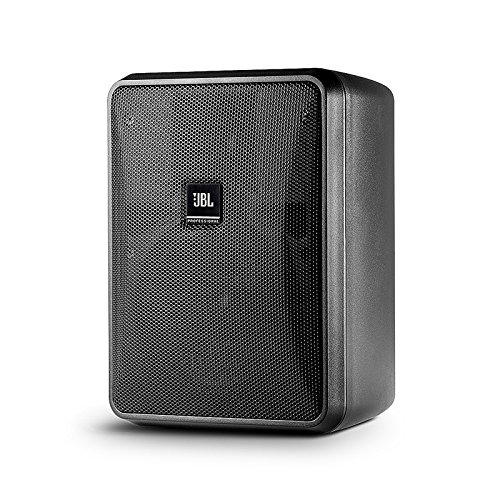
JBL Professional Control 25-1 Compact Indoor/Outdoor Background/Foreground Speaker, Black, Sold as Pair
$457.98 Specs and sizingWhere the ceiling cannot be cut, a bracketed surface speaker on the wall covers the room from the front rather than from overhead, which also helps the sound feel like it comes from the screen.
Best for: Rooms with a solid ceiling, exposed structure or a historic finish
Check price on Amazon
Listen Technologies LA-430 Intelligent Ear Phone/Neck Loop Lanyard, Black, Compatible with All iDSP Receivers, 3.5mm Earphone Jack, Provides the Correct Field Strength and Flat Frequency Respon
$71.00Overflow rooms are disproportionately used by people who find the main room difficult, so assistive listening coverage matters here more than the seat count suggests.
Best for: Extending existing assistive listening coverage into the overflow space
Check price on AmazonHow to commission an overflow room
- Decide the video transport before anything else. Measure the cable distance from the booth to the overflow display. Under about 50 feet, direct HDMI works. Beyond that, use SDI over coax or HDBaseT over structured cable. Rule out the public livestream immediately, because it runs seconds behind the room and will never sync.
- Take a dedicated audio feed, not a borrowed one. Feed the room from a matrix or aux output on the console so its level is independent of the house and the stream. Borrowing the broadcast mix means every change made for online viewers changes the overflow room too, which is how the room ends up either deafening or inaudible.
- Lay out the ceiling grid from the ear plane. Subtract 4 feet from the ceiling height for seated ears, calculate the coverage circle, and set spacing from that. Start the grid at half the spacing distance from each wall. For a 30 by 24 foot room at 9 feet, that is 12 speakers at 10 foot spacing, or 20 at 7.1 feet if intelligibility is critical.
- Set taps and size the amplifier. Use 8 watt taps for speech, total them, divide by 0.8 and round up. Twelve speakers gives a 96 watt load and a 150 watt amplifier. Keep the margin so the room can grow. The method is the same as any distributed system and is covered in how to wire a 70 volt system.
- Set lip sync delay against the screen. With video and audio both live, stand in the room and watch the speaker on screen. Increase audio delay in small steps until the lips match the sound. If audio arrives after the picture instead, the fault is in the video path, not the audio, and you need a lower-latency transport.
- Set acoustic delay only if the room is open to the sanctuary. If people in the space can hear the main system directly, measure the path difference in feet, multiply by 0.889 milliseconds, and add 10 to 15 milliseconds of Haas offset. Walk the boundary between the two spaces while somebody speaks into a microphone and confirm the two arrivals fuse into one.
- Set the level ceiling and hide the control. Play a normal service and set the room level so a conversation at the back is possible without shouting, then lock it. Overflow rooms attract families with small children, and a room that can be turned up by anybody will be, usually by somebody sitting directly under a speaker.
- Sit in every seat before you call it done. Sit in each corner, under a speaker, and by the door. Listen for dead spots, for the local speaker jumping out as its own source, and for lip sync drift. A room that is only ever checked from the doorway is a room whose worst seat nobody has heard.
Screen size and brightness for the overflow room
Size the screen from the furthest seat using the six times rule, which is the right standard for lyrics, scripture and sermon points. The furthest viewer should sit no more than six screen heights away, and the nearest no closer than about one and a half screen widths.
For a 30 foot deep overflow room, that gives a screen height of 5 feet, a width of 8.9 feet and a diagonal of about 122 inches, so a 120 inch screen is the buyable answer. Keep the bottom of the image at least 4 feet off the floor so heads do not block it, which matters far more in a flat-floored overflow room than in a raked sanctuary.
Brightness follows from area. A 120 inch diagonal screen is 43 square feet, so at 35 foot-lamberts for normal room lighting it needs about 1,356 lumens and rounds up to 1,500 ANSI. Overflow rooms often have windows and the lights stay up, so the 50 foot-lambert figure of about 1,938 lumens, rounding to 2,000 ANSI, is the safer planning number. Run it yourself in the projector lumens calculator, and note that a large flat panel is often a better answer than a projector in a bright, low-ceilinged room.
Assistive listening in the overflow space
Overflow rooms are used disproportionately by people who find the main room hard: families with young children, people who need to move during the service, and people who find the sanctuary too loud or too reverberant. That overlaps heavily with the group who need assistive listening, so coverage in this room matters more than the seat count implies.
The honest legal position is worth stating clearly. Houses of worship are exempt from ADA Title III. Most churches follow the 2010 ADA Standards table anyway, and the exemption does not hold for a church that rents its auditorium to the public or runs a school, so the safe planning assumption is to meet the table. Confirm that your transmitter's coverage actually reaches the overflow space rather than assuming it does, since walls and distance both attenuate it. The full position and the receiver counts are in hearing assistance requirements for churches.
How we chose
We did not test these products in person and we never claim to. Picks are researched from manufacturer specification sheets and operator manuals, FCC rules where spectrum is involved, published standards, warranty terms, and the recurring themes in verified owner reviews. Every pick is matched to a real room size, seat count or input list rather than to a price bracket, and it is placed in the tier where its capability actually belongs. Where a product is wrong for most churches we say so on the page.
Sources
- 2010 ADA Standards for Accessible Design, section 219.3 assistive listening
- Loudspeaker manufacturer application guides for distributed ceiling spacing patterns
- AV design standards for viewing distance, the four, six and eight times rule
Frequently asked questions
Can we feed the overflow room from our livestream?
No. A platform livestream runs typically 2 to 30 seconds behind the room and the delay is not stable, so people who can hear the sanctuary or who walk between spaces experience two services at once. Use a direct HDMI, SDI or HDBaseT path, which adds only a frame or two, and reserve the stream for people who are not in the building.
How many ceiling speakers does an overflow room need?
A 30 by 24 foot room with a 9 foot ceiling needs 12 speakers at 10 foot edge to edge spacing, or 20 at 7.1 foot minimum overlap spacing where the preaching voice must be clear in every seat. Twelve speakers on 8 watt taps is a 96 watt load, which calls for a 150 watt 70 volt amplifier after the 80 percent rule.
Does the overflow room need audio delay?
It needs lip sync delay to match whatever the video path adds, set by watching the screen until the lips match. It needs acoustic delay only if the space is open to the sanctuary. In that case multiply the path difference in feet by 0.889 milliseconds and add 10 to 15 milliseconds of Haas offset so the local speakers stop sounding like their own source.
What size screen does an overflow room need?
Use the six times rule for lyrics and sermon points: the furthest seat sits no more than six screen heights back. A 30 foot deep room therefore wants a 5 foot high image, which is 8.9 feet wide and about a 122 inch diagonal, so a 120 inch screen is the practical size. Keep the bottom of the image at least 4 feet off the floor.
Should the overflow room have its own volume control?
It should have its own level, set once and then locked. Feed it from an independent matrix or aux output so house and stream changes do not affect it, set the level so people can talk quietly without shouting, and hide the control. An accessible volume knob in a room full of families will end up at one extreme or the other within a month.
Do we need assistive listening in the overflow room?
Plan for it. Overflow spaces are used heavily by people who find the main room difficult, which overlaps with the group needing assistance. Houses of worship are exempt from ADA Title III, but the exemption does not apply to a church renting its auditorium publicly or running a school, so meeting the 2010 ADA table is the safe assumption. Verify the transmitter actually covers the room.
Researched, not professional advice. This page is compiled from published manufacturer specifications, operator manuals, FCC rules, published standards and owner-review consensus, not hands-on testing. Sound system design, rigging loudspeakers overhead, and any electrical work are jobs for a qualified professional: have flown loudspeakers and their attachment points signed off by a structural engineer or a certified rigger, and have all wiring done by a licensed electrician to your local code. Wireless microphone rules change, so confirm the current FCC position before buying. As an Amazon Associate we earn from qualifying purchases.