Rooms beyond the sanctuary
Outdoor Church Service Sound
Quick answer
An outdoor service needs about 1,500 watts per loudspeaker to hold 88 dBA at 80 feet, roughly three times the 473 watts that covers the 45 foot throw of a 250 seat sanctuary. Outdoors there are no walls returning energy, so every doubling of distance costs 6.02 dB permanently.
Take the system that fills your sanctuary outside and it will disappoint everybody. Not because it broke, but because the room was doing a large share of the work and the lawn does none of it. Indoors, energy bounces off walls, ceiling and floor and comes back to the listener. Outdoors you are on the inverse square law alone, and the inverse square law is merciless: every doubling of distance costs 6.02 dB and it never comes back.
That single fact sets the whole budget. Before renting or buying anything, put your actual furthest listener distance into the amplifier power calculator and look at the watts it returns. The number is usually two to four times what people expect, and it is better to discover that on a Tuesday than at the service.
On this page
How far does an indoor system actually reach outdoors?
Work a real example. A 250 seat sanctuary in the model this site uses is about 35 feet wide and 53 feet long, with a throw of 45 feet to the furthest seat. To hold 88 dBA for a blended service with 12 dB of peak headroom, from a loudspeaker with 96 dB sensitivity, that room needs about 473 watts per box across two boxes.
Put the same pair of boxes on a lawn and ask them to cover a congregation 80 feet deep. The requirement rises to about 1,494 watts per box, so call it 1,500. That is 3.16 times the power for 1.78 times the distance, which is exactly what the inverse square law predicts: 20 times the base-10 logarithm of 1.78 is 5.0 dB, and 5 dB is a factor of 3.16 in watts.
This is the honest answer to the question churches actually ask, which is whether the sanctuary system will do for the outdoor service. It will, up to roughly the distance it already covers indoors, and no further. Past that you are adding power on a curve that gets steep very quickly.
Watts per loudspeaker by outdoor distance
Find your furthest listener, read across to your service style, and note that the contemporary column stops being a purchasing answer somewhere around 80 feet. That is not a limitation of the table, it is the physics telling you to change approach.
Holding 88 dBA at 80 feet outdoors takes about 1,494 watts per loudspeaker, rising to about 3,360 watts at 120 feet, because there is no room reinforcement to help at any distance.
| Furthest listener | Speech at 75 dBA | Blended at 88 dBA | Contemporary at 95 dBA | Practical answer |
|---|---|---|---|---|
| 30 ft | 7 W | 210 W | 1,053 W | One pair of powered 12 inch boxes |
| 40 ft | 12 W | 373 W | 1,871 W | One pair of powered 12 inch boxes |
| 50 ft | 18 W | 583 W | 2,924 W | One pair, larger boxes for a band |
| 60 ft | 27 W | 840 W | 4,211 W | One pair plus a subwoofer for a band |
| 80 ft | 47 W | 1,494 W | 7,485 W | Two pairs, or a delay position |
| 100 ft | 74 W | 2,334 W | 11,696 W | Delay speakers, not a bigger amplifier |
| 120 ft | 106 W | 3,360 W | 16,842 W | Delay speakers are now mandatory |
Figures assume a loudspeaker sensitivity of 96 dB at 1 watt at 1 metre, 10 dB of peak headroom for speech and 12 dB for music, and free-field conditions with no useful reflections. A less sensitive loudspeaker needs proportionally more power: every 3 dB less sensitivity doubles the watts required.
Why more amplifier stops being the answer
Look at the contemporary column above. At 100 feet it asks for 11,696 watts per side. The largest amplifier in normal church use is 4,000 watts, so the table has already left the world of things you can buy. When the answer exceeds the largest sensible amplifier, the real answer is more loudspeakers in more places, not a bigger amplifier in one place.
There are three practical moves, in order of cost.
Move the loudspeakers closer to the people. Distance is the expensive variable, so halving it saves 6.02 dB, which is three quarters of the power. Two boxes at the front edge of the seating beat two boxes behind a platform twenty feet further back, every time.
Add a delay position. A second pair partway back, delayed to the main system, lets both pairs work over a short distance instead of one pair working over a long one. Set the delay to the path difference multiplied by 0.889 milliseconds per foot, then add 10 to 15 milliseconds of Haas offset so the rear system stays invisible and the sound still appears to come from the platform. The delay speaker timing calculator does the arithmetic.
Use a narrower pattern. A 60 by 40 degree box puts more of its energy down the length of the field instead of into the grass on either side. Coverage pattern is free power, and outdoors it is the most under-used tool there is. A column array such as the QSC KC12 is built around exactly this idea.
How to set up an outdoor service
- Measure the furthest listener before choosing gear. Walk to where the last row of chairs will actually go and measure it, in feet, from where the loudspeakers will stand. That distance is the only input that matters for power. Guessing it low is the most common outdoor mistake, because open ground always looks smaller than it measures.
- Put the loudspeakers at the front edge of the seating. Not behind the platform, not level with the back of the stage. Every foot the boxes sit behind the front row is a foot added to every listener distance, and distance is the expensive variable. Moving the boxes forward is the cheapest 3 to 6 dB you will ever find.
- Aim down and across, not straight out. A box aimed flat fires most of its energy over the heads of the congregation and into the neighbours. Tilt each box down so the pattern lands on the last row, and angle the pair outward enough to cover the seating width without overlapping heavily in the centre, which causes comb filtering down the middle aisle.
- Ballast every stand and dress every cable. Sandbag each stand, run cable along the back of the seating rather than across it, and ramp or tape anything that crosses a walking route. Outdoor services put cable in grass where nobody can see it, and a trip hazard at a church picnic is a genuine injury risk, not a tidiness issue.
- Put the power plan in writing before the day. Total the actual draw of everything on the circuit and check it against 1,920 watts for a 20 amp circuit. A powered loudspeaker draws roughly a fifth of its rated output on programme material for a class D design, so a pair of 1,000 watt boxes is about 400 watts, not 2,000. It is the catering that overloads the circuit.
- Scan wireless on site, on the day. Outdoors there are no walls attenuating anything, so you will see far more distant transmitters than you do inside. Scan with all your transmitters off, assign clear frequencies, then walk the full congregation area with each transmitter live. Keep antennas in line of sight of the transmitters and up off the ground.
- Ring out the system with the microphones where they will be. Feedback behaves differently outdoors because there is no room gain but also no room to mask problems. Set gain structure with each microphone in its performing position, push up until it rings, then pull back and notch. Do this before the congregation arrives, because bodies absorb sound and the system will behave differently once seats fill.
- Have a weather plan and a cover for every box. Decide in advance what wind speed or rain forecast cancels the outdoor plan, and who makes that call. Keep a cover for every loudspeaker and the console. Powered loudspeakers contain mains electronics, and water plus mains electricity plus a field full of people is not a risk to improvise around.
What to actually buy or rent
An outdoor service is the strongest argument for powered loudspeakers there is: fewer boxes to carry, no separate amplifier rack to power and protect, and processing already matched to the drivers. Everything here is chosen to be carried by two people and set up in an hour.

QSC K12.2 Active 12" Powered 2000 Watt Loudspeaker
$899.99 Specs and sizingHigh output in a box one volunteer can lift, with preset voicings and enough level to cover a congregation 50 to 60 feet deep before you need a second pair.
Best for: A church picnic, a baptism or an outdoor service with a band
Check price on Amazon
JBL Professional EON712 Powered PA Speaker, 12 inch, 1300 Watt
$549.00 Specs and sizingSubstantially cheaper than the flagship boxes and still enough output for a speech-led service across a normal churchyard, with onboard processing and a pole socket.
Best for: Speech-led outdoor services and smaller gatherings
Check price on Amazon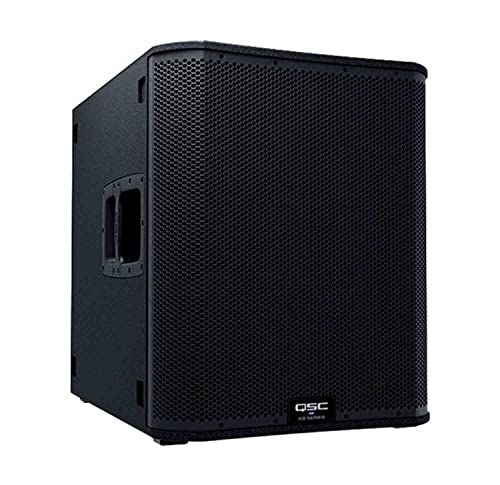
QSC KS118 Active 18" Subwoofer
$2,199.99 Specs and sizingOutdoors there is no room gain to reinforce the bottom octave, so a band with programmed low end needs a real subwoofer or it will sound thin no matter how loud the tops are.
Best for: Contemporary worship outdoors with tracks or a full band
Check price on Amazon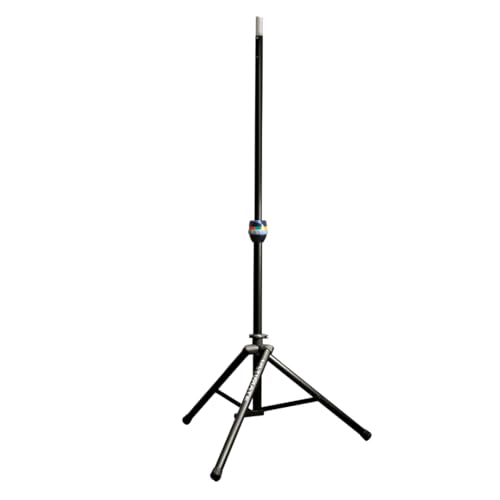
Ultimate Support TS-90B Telelock Tripod Speaker Stand Pair
$219.99A heavy-duty tripod with a positive locking mechanism, which is the specification that matters when a cabinet is acting as a sail in an open field. Ballast them regardless.
Best for: Any outdoor deployment on tripod stands
Check price on Amazon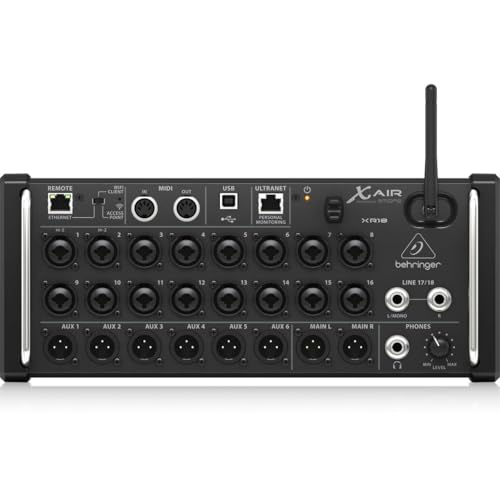
Behringer X AIR XR18 18-Channel, 12-Bus Digital Mixer for iPad/Android Tablets with 16 Programmable Midas Preamps, Integrated Wifi Module and Multi-Channel USB Audio Interface
$509.00 Specs and sizingEighteen inputs, six aux buses and tablet control, so the operator can walk out into the congregation and set the mix from where people are actually sitting rather than from behind the boxes.
Best for: Outdoor services where there is no fixed mix position
Check price on AmazonWireless outdoors is a different problem
Indoors, walls attenuate distant transmitters and your own signal has a short path. Outdoors, both of those change. Your range improves because there is nothing in the way, and so does everybody else's, so a scan on a field will show transmitters you have never seen in the building.
Scan on the day, on site, with every one of your transmitters switched off so the receiver sees only outside signals. Then assign frequencies, switch your transmitters on, and walk the whole congregation area listening for dropouts. Keep receiver antennas in line of sight of the transmitters and up off the ground, because a ground plane absorbs far more than people expect.
One legal point that matters more when buying or borrowing gear for an outdoor event. In the United States the working band is 470 to 608 MHz. TV channel 37, which is 608 to 614 MHz, is prohibited. The 614 to 616 MHz guard band is legal at 20 milliwatts. The bands 617 to 652 MHz and 663 to 698 MHz are illegal to operate, and 698 to 806 MHz has been prohibited since 2010. Borrowed or secondhand gear tuned to a prohibited band is worthless and must not be switched on. The full method is in how to coordinate wireless microphone frequencies.
Things that only go wrong outdoors
Wind on the vocal microphone. A bare grille outdoors produces a low-frequency roar on every gust. Foam windscreens on everything, and a proper windjammer on any microphone that will face into wind. This is not optional at a lakeside baptism.
The system sounds fine empty and thin when full. A congregation absorbs sound and blocks the path at ear height. Aim over the first rows into the back, and expect to add level once seats fill.
Temperature changes the delay times. Sound travels at about 1,125 feet per second at 68 degrees Fahrenheit and faster when it is hotter, so a delay position set at a cool morning rehearsal will be slightly wrong by a hot afternoon. For speech distances the error is small, but it is real.
The neighbours. Outdoors your sound goes everywhere, and the complaint that follows an outdoor service is almost always about a subwoofer pointed at housing. Check local noise ordinances, aim deliberately, and consider a cardioid subwoofer arrangement if low frequency spill is a genuine issue.
Nobody planned the pack-down. An outdoor service ends with tired volunteers, damp cable and fading light. Budget the same time for pack-down as for setup, and count the microphones back into the case before anybody leaves. For the reusable version of this whole exercise, see portable church AV setup and the options in portable PA systems for churches.
How we chose
We did not test these products in person and we never claim to. Picks are researched from manufacturer specification sheets and operator manuals, FCC rules where spectrum is involved, published standards, warranty terms, and the recurring themes in verified owner reviews. Every pick is matched to a real room size, seat count or input list rather than to a price bracket, and it is placed in the tier where its capability actually belongs. Where a product is wrong for most churches we say so on the page.
Sources
- FCC guidance on wireless microphone operation and prohibited bands
- National Electrical Code continuous load rule and GFCI requirements for outdoor receptacles
- Loudspeaker manufacturer published sensitivity and power handling specifications
Frequently asked questions
How many watts do I need for an outdoor church service?
About 1,494 watts per loudspeaker to hold 88 dBA at 80 feet with 12 dB of peak headroom from a 96 dB sensitive box, so round to 1,500. At 50 feet the figure drops to 583 watts and at 120 feet it rises to 3,360. A speech-only service is dramatically cheaper, needing only about 47 watts at 80 feet.
Why does outdoor sound need so much more power than indoors?
Indoors, walls, ceiling and floor return energy to the listener, so the room does part of the work. Outdoors there is nothing to reflect and you are on the inverse square law alone, where every doubling of distance costs 6.02 dB. That loss is permanent, which is why a system that comfortably covers a 45 foot sanctuary throw runs out around 80 feet on a lawn.
Can we use our sanctuary speakers outside?
Up to roughly the distance they already cover indoors, and no further. If the throw to your furthest indoor seat is 45 feet, expect about that outdoors before the level falls away. Beyond it, move the boxes closer to the people, add a delayed second pair, or use a narrower coverage pattern, because adding amplifier power alone gets expensive very quickly.
What power do we need for an outdoor service?
Have a licensed electrician provide or verify the supply, with GFCI protection on outdoor receptacles. A 20 amp circuit at 120 volts carries 16 amps, or 1,920 watts, under the continuous load rule. A pair of 1,000 watt class D powered boxes draws only around 400 watts on programme material, so the audio usually fits easily and the catering equipment is what overloads the circuit.
How do we stop speaker stands blowing over outdoors?
Ballast every stand with sandbags or weight plates, keep the height low, and never place a stand where people gather beneath or beside it. A loudspeaker cabinet catches wind like a sail and a tripod has a small footprint. If wind is forecast, put the boxes on the ground or on weighted pole mounts instead of raising them, and have a written cancellation threshold.
Does wireless work better or worse outdoors?
Your own range improves because nothing blocks the path, but so does everybody else, so you will see distant transmitters that walls normally hide. Scan on site on the day with your transmitters off, assign clear frequencies, then walk the whole area with each transmitter live. Keep antennas in line of sight and up off the ground, because ground absorbs more than people expect.
Researched, not professional advice. This page is compiled from published manufacturer specifications, operator manuals, FCC rules, published standards and owner-review consensus, not hands-on testing. Sound system design, rigging loudspeakers overhead, and any electrical work are jobs for a qualified professional: have flown loudspeakers and their attachment points signed off by a structural engineer or a certified rigger, and have all wiring done by a licensed electrician to your local code. Wireless microphone rules change, so confirm the current FCC position before buying. As an Amazon Associate we earn from qualifying purchases.