Projection and screens
Laser vs Lamp Projector
Quick answer
Run your hours before paying for laser. At eight hours a week a 4,000 hour lamp reaches end of life in about ten years, while a 20,000 hour laser lasts roughly 48 years of the same use. Laser earns its price in heavy-use rooms and in ceiling mounts nobody wants to reach.
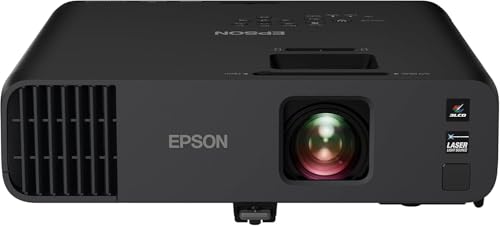
Epson Pro EX11000 3-Chip 3LCD Full HD 1080p Wireless Laser Projector
$1,399.99 Specs and sizingA 3-chip 3LCD projector with a laser light source rated at 20,000 hours, so there is no lamp to replace and no gradual dimming over the years.
Best for: A mid-size sanctuary that is tired of buying projector lamps
Check price on Amazon
Epson Pro EX9270 Wireless 1080p 3-Chip 3LCD Business Projector
$999.99The same 3-chip 3LCD approach with a conventional lamp, at roughly four hundred dollars less, for a room where the projector runs a few hours a week.
Best for: A small room or a fellowship hall where the lights can come down
Check price on AmazonDo the arithmetic before accepting the sales pitch. A laser light source is commonly rated at 20,000 to 30,000 hours against 3,000 to 5,000 for a lamp, which sounds decisive until you count how many hours your projector actually runs. A church using it for one service a week is looking at roughly 200 hours a year, and at that rate a lamp outlives most building plans.
Laser still wins for three reasons that are not about lamp replacement at all: it dims far more slowly, it starts and stops instantly with no cool-down cycle, and a sealed laser engine fifteen feet up a ceiling is one less reason to hire a lift. Work out which of those apply to you, then size the brightness properly on the projector lumens calculator.
Side by side
| Model | Price | Maximum resolution | Light source | Aspect ratio | Light source life |
|---|---|---|---|---|---|
| Epson Pro EX11000 3-Chip 3LCD Full HD 1080p Wireless Laser Projector | $1,399.99 | 1920 x 1080 | Laser | 16:9 | 20,000 hours |
| Epson Pro EX9270 Wireless 1080p 3-Chip 3LCD Business Projector | $999.99 | 1920 x 1080 | Lamp | 16:9 | - |
When each light source reaches end of life
Find your weekly hours, including rehearsals, midweek meetings and anything the room is used for during the week. Most churches guess low.
At eight hours a week a 4,000 hour lamp reaches end of life in about ten years, while a 20,000 hour laser lasts about 48 years of the same use, which is why lamp cost only decides this in heavy-use rooms.
| Weekly use | Hours per year | Lamp at 4,000 hours | Laser at 20,000 hours |
|---|---|---|---|
| 4 hours, one service | 208 | About 19 years | Beyond any building plan |
| 8 hours, service and rehearsal | 416 | About 10 years | About 48 years |
| 15 hours, multiple services | 780 | About 5 years | About 26 years |
| 30 hours, a school or day use | 1,560 | About 2.6 years | About 13 years |
| 50 hours, left on all day | 2,600 | About 1.5 years | About 7.7 years |
Lamp life figures are typically quoted in economy mode and are shorter at full brightness. Treat 4,000 hours as an optimistic midpoint of the usual 3,000 to 5,000 range. A lamp also dims steadily across its life, so a projector at 3,000 hours is noticeably less bright than the day it was installed even though it still works.
Choose a lamp projector for light use and a tight budget
If the projector runs four to eight hours a week in a room with a reachable mount, a lamp projector is a perfectly defensible purchase and the difference buys something else. The Pro EX9270 at $999.99 is a 3-chip 3LCD projector, which matters far more for how a lyric slide looks than the light source does, and that saving covers a decent screen.
Two things to check before committing. First, confirm the replacement lamp for that specific model is still available and get its actual price, because a discontinued lamp in year six turns a cheap projector into a dead one. Second, check you can physically reach the projector, since a lamp change on a ceiling mount twenty feet up means hiring a lift each time.
Plan for the dimming rather than the failure. Lamps rarely stop working suddenly; they fade, and a congregation adapts so gradually that nobody notices until a new lamp goes in. Put a lamp hours check in the maintenance schedule and replace on hours rather than on complaints.
Choose laser for heavy use, hard access and consistent brightness
The strongest argument for laser is not the hours, it is stability. A laser light source holds its brightness far more consistently across its life, so a room set up to be just bright enough stays just bright enough. A lamp projector that was marginal on day one will be visibly inadequate at half life, which is how churches end up buying a second projector they did not budget for.
Access is the second argument and it is often the decisive one. The Optoma ZH551 at $1,499.00 has a dust-resistant sealed engine and a 30,000 hour light source, which in a building with an old air handling system and a projector fifteen feet up means nobody gets a lift out for years. The ZH451 at $1,099.00 is the more affordable 30,000 hour option.
Laser also starts and stops instantly. There is no warm-up before the pre-service slides and no cool-down fan running after the last person leaves, which suits a room used in short bursts through the week. If the room has real windows or lighting that never comes down, the PowerLite L530U at $2,749.00 is the brighter install answer, covered in choosing a church projector.
Sources
- Epson published Pro EX series specifications
- Optoma published ZH series light source ratings
Frequently asked questions
How many hours a year does a church projector actually run?
More than most churches estimate. Count the service, the rehearsal before it, any midweek meeting in the same room and any time somebody switched it on and forgot. A single Sunday service is around 200 hours a year, while a room also used for a school or daily meetings can pass 1,500 hours, which changes the answer entirely.
Do laser projectors get dimmer over time at all?
Yes, but far more slowly than a lamp does, and the rated hours usually describe the point at which output has fallen to half of the original brightness rather than the point of failure. That gradual decline is why sizing a projector with headroom matters more than the light source. Our lumens calculator builds that headroom in.
Is a laser projector brighter than a lamp projector?
Not inherently. Brightness is set by the model rather than the light source, and there are bright lamp projectors and dim laser ones. What laser gives you is brightness that stays where it started. Compare published lumens between specific models and check the colour brightness figure as well as the white one.
Can we replace the laser engine when it wears out?
Generally not as a user-serviceable part in the way a lamp is, which is the honest trade. A laser projector is treated as a unit with a very long service life rather than a chassis with a consumable inside it. At 20,000 hours that life exceeds the replacement cycle of almost every church projector for other reasons.
Which matters more, the light source or the chip technology?
For how a lyric slide looks, the chip technology, by a clear margin. A 3-chip 3LCD projector publishes the same white and colour brightness, while a single-chip DLP can be far dimmer on colour than its headline figure suggests. Settle that question first, then choose a light source based on your weekly hours.
Researched, not professional advice. This page is compiled from published manufacturer specifications, operator manuals, FCC rules, published standards and owner-review consensus, not hands-on testing. Sound system design, rigging loudspeakers overhead, and any electrical work are jobs for a qualified professional: have flown loudspeakers and their attachment points signed off by a structural engineer or a certified rigger, and have all wiring done by a licensed electrician to your local code. Wireless microphone rules change, so confirm the current FCC position before buying. As an Amazon Associate we earn from qualifying purchases.