Microphones
Best Choir Microphones for Churches
Quick answer
A choir needs one hanging microphone for every 8 to 12 singers, so a 24 voice choir wants three. Hang each one about 2 to 3 feet in front of and above the front row, and space them at least three times that distance apart to keep the phase interference under control.
Choir reinforcement is the hardest routine job in church audio and the one most often blamed on the microphone. It is rarely the microphone. A choir is a quiet, diffuse source standing in the most reverberant part of the building, usually behind the loudspeakers, and it is asked to compete with a congregation singing back at it. The gain required is high, the margin before feedback is small, and the difference between a system that works and one that howls is measured in feet of hanging cable.
Get the count and the channel list right first with the mixer channel calculator, and read how to mic a choir for the placement detail. The alternative of handing every singer a microphone is compared honestly in hanging choir microphones against handheld.
On this page
How many microphones does a choir need?
Choir size, the microphone count that covers it, and the hanging geometry each layout needs. Distances are from the capsule to the front row of singers.
A 24 voice choir on three rows needs three hanging microphones, each 2 to 3 feet above and in front of the front row and roughly 8 feet apart.
| Choir size | Rows | Microphones | Height above front row | Spacing between mics |
|---|---|---|---|---|
| Up to 12 | 1 to 2 | 1 to 2 | 2 to 3 feet | 8 feet |
| 12 to 24 | 2 to 3 | 2 to 3 | 2 to 3 feet | 8 feet |
| 24 to 40 | 3 | 3 to 4 | 3 feet | 8 to 10 feet |
| 40 to 60 | 3 to 4 | 4 to 5 | 3 to 4 feet | 10 feet |
| 60 and up | 4 and more | 5 or more, sectioned | 4 feet | 10 to 12 feet |
The 3 to 1 rule sets the spacing: microphones should sit at least three times further from each other than each is from its source, otherwise the same voice arriving at two capsules at slightly different times causes comb filtering and a hollow sound. Height is the variable that matters most, and lower is nearly always better.
Height is the whole problem
Every foot further from the choir costs level. The inverse square law says doubling the distance from the source drops the wanted signal by 6 dB, while the room reverberation stays where it was. A microphone 3 feet above the front row and one 6 feet above are not a small difference: the higher one needs 6 dB more gain to reach the same level, and that 6 dB is taken directly out of your margin before feedback.
This is why choir systems that were installed to look tidy so often fail. A capsule tucked up against a 20 foot ceiling is 17 feet from the singers, picks up mostly room, and cannot be turned up. The microphone is not underperforming. It is being asked to hear a quiet source from across the building.
The second rule is the 3 to 1 rule. Microphones must be at least three times further apart than each is from its source. With capsules 3 feet from the front row, they belong at least 9 feet apart. Closer than that and one voice reaches two capsules at slightly different times, which cancels parts of the spectrum and produces the thin, phasey choir sound that no amount of equalisation fixes.
The third is that choir microphones must be behind the loudspeaker coverage, not in it. If the mains cover the chancel, the loop is closed before you have raised a fader. Aiming, covered in how to aim and place church speakers, buys more than any capsule upgrade.
Small church: a small choir, a small budget
For a choir under about 24 voices, three inexpensive hanging condensers beat one premium capsule every time, because coverage is what the job needs. All of these need phantom power from the console, which every modern mixer provides. Check the phantom power requirements chart if the console is older.
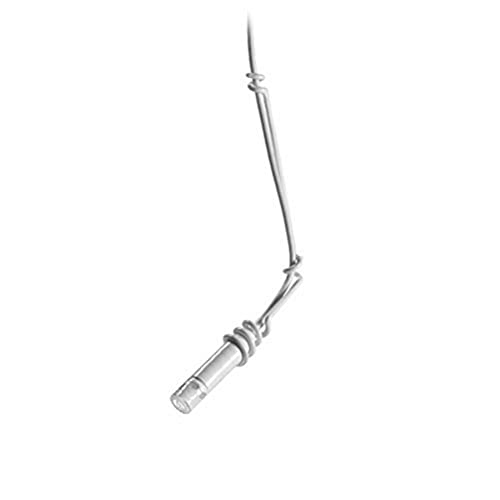
Audio-Technica PRO 45W ProPoint Cardioid Condenser Hanging Microphone
$109.00A budget hanging cardioid condenser in white, so it vanishes against a pale ceiling. Three of these over the risers is a real choir system for roughly the price of one premium capsule, and coverage is what a choir actually needs.
Best for: A choir of up to about 24 voices on a small budget
Check price on Amazon
Audio-Technica PRO 35 Cardioid Condenser Clip-on Instrument Microphone
$159.00A clip-on cardioid condenser that mounts to a music stand, which is a workable fallback in a building where nothing may be attached to the ceiling. Not as good as hanging, and much better than a handheld passed down the row.
Best for: Historic buildings where the ceiling is untouchable
Check price on AmazonWho should not buy this tier: Choirs over about 30 voices, where the number of capsules needed starts to consume the console channel count.
Mid-size: a permanent choir system that looks installed
A mid-size church with a standing choir wants capsules that are permanent, discreet and consistent, because the system will be set once and left for a decade. What the extra money buys is a lower profile, a more even off axis response and a shock mount that keeps building vibration out of the signal. It does not buy more level, which is why placement still matters more than the model.

Audio-Technica U853R Cardioid Condenser Hanging Microphone 250 Ohms, Low Profile Design
$229.00A low profile hanging cardioid available in a finish that disappears against the ceiling it hangs from, with an even enough off axis response to cover a wide section of risers without the outer singers sounding dull.
Best for: Choir coverage where the microphones must not be visible from the pews
Check price on Amazon
Audio-Technica U857QL Cardioid Condenser Quick-Mount Gooseneck Microphone
$239.00A quick-mount gooseneck that unplugs from its base, which suits a director or cantor position that needs a dedicated channel and must be removable between services.
Best for: A cantor, a director announcement channel or a shared lectern
Check price on AmazonWho should not buy this tier: Rooms with a very high chancel ceiling, where a cardioid at that distance picks up more room than choir.
Large room or broadcast: capsules that survive a livestream
Once the service is streamed, the choir microphones are carrying the choir to an audience listening on headphones, where every reflection and every phase problem is audible. That raises the standard. It also raises the value of getting the count and the spacing right, because a broadcast mix cannot hide comb filtering the way a reverberant room can. See how to mix for livestream for how these channels are treated differently from the room mix.
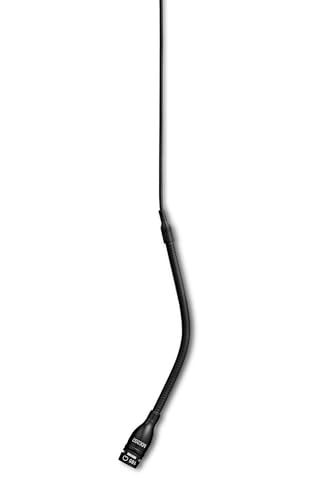
Shure MX202 Overhead Microphone - Black, Cardioid Condenser Mic with 3 Pin XLR Connector, Preamp Included (MX202B/C)
$270.00A hanging overhead cardioid condenser with the preamp in line, built for permanent installation. Hung correctly it covers a wide section of risers evenly, which is what a broadcast mix needs from a single channel.
Best for: Choir and ensemble, hung from the ceiling or a truss in a large room
Check price on Amazon
Shure MX412/S Supercardioid Condenser Microphone, 12" Gooseneck with Attached XLR Preamp, Shock & Flange Mount, Snap-Fit Foam Windscreen
$296.00 Specs and sizingA 12 inch supercardioid gooseneck for a soloist or cantor position in a reverberant chancel. The tighter pattern rejects more of the room than a cardioid, which is the difference between a usable solo channel and a ringing one.
Best for: A cantor or soloist position in a hard-surfaced chancel
Check price on AmazonWho should not buy this tier: Do not buy this tier for a choir of eight in a small chapel. Premium capsules do not overcome bad placement, and in a small room three inexpensive capsules hung at the right height will beat one excellent capsule hung too high, every time. Spend the difference on getting somebody to hang them properly.
The choir capsules compared
| Model | Price | Microphone type | Polar pattern | Needs phantom power |
|---|---|---|---|---|
| Audio-Technica PRO 45W ProPoint Cardioid Condenser Hanging Microphone | $109.00 | Condenser | Cardioid | Yes |
| Audio-Technica U853R Cardioid Condenser Hanging Microphone 250 Ohms, Low Profile Design | $229.00 | Condenser | Cardioid | Yes |
| Shure MX202 Overhead Microphone - Black, Cardioid Condenser Mic with 3 Pin XLR Connector, Preamp Included (MX202B/C) | $270.00 | Condenser | Cardioid | Yes |
What choir microphones will not fix
They will not make a quiet choir loud. A choir that cannot be heard acoustically at the front row is asking the system for a great deal of gain in a reverberant room, and that gain is exactly what feedback limits. More often the answer is fewer, closer microphones rather than more distant ones.
They will not fix a congregation that sings over the choir. Hanging capsules are omnipresent by nature: they hear the room, and in a full sanctuary a good part of what they hear is the congregation. This is normal and it is why choir channels are usually mixed lower than a director expects.
And they will not survive being asked to do a soloist job. When one voice must sit above the choir, that voice needs its own microphone, which is the worship vocal microphone question rather than this one. Trying to solve it by pushing one hanging channel simply brings up everything under it.
How we chose
We did not test these products in person and we never claim to. Picks are researched from manufacturer specification sheets and operator manuals, FCC rules where spectrum is involved, published standards, warranty terms, and the recurring themes in verified owner reviews. Every pick is matched to a real room size, seat count or input list rather than to a price bracket, and it is placed in the tier where its capability actually belongs. Where a product is wrong for most churches we say so on the page.
Sources
- Manufacturer published specifications for each microphone listed
- Manufacturer published placement guidance for hanging choir microphones
- Consensus of verified owner reviews across major retailers
Frequently asked questions
How many microphones does a church choir need?
One for every 8 to 12 singers, so a 24 voice choir needs three and a 40 voice choir needs four. The count follows coverage width rather than loudness, because each capsule can only cover so much of the risers evenly. Adding more capsules than that starts to cost you gain, since every open microphone adds room energy to the feedback loop.
How high should choir microphones hang?
About 2 to 3 feet above and slightly in front of the front row, which usually puts them near the height of the back row heads. Every doubling of that distance costs 6 dB of wanted signal while the room reverberation stays the same, so a capsule tucked against a high ceiling is the single most common reason a choir system cannot be turned up.
What is the 3 to 1 rule for choir microphones?
Microphones should be spaced at least three times further from each other than each one is from its source. With capsules hanging 3 feet from the front row, they belong at least 9 feet apart. Closer spacing means one voice reaches two capsules at slightly different times, which cancels parts of the spectrum and produces a thin, hollow choir sound.
Condenser or dynamic microphones for a choir?
Condenser, without much argument. A choir is a quiet, distant source and a condenser is far more sensitive, which is exactly what the job needs. Dynamic microphones suit loud close sources such as a snare drum or a vocalist an inch away. The trade is that condensers need phantom power and hear more of the room, which places the burden back on placement.
Why does our choir system feed back before we can hear the choir?
Almost always because the capsules are too far from the singers, or they sit inside the main loudspeaker coverage. Both raise the gain required and lower the margin available. Lowering the microphones and aiming the loudspeakers away from the chancel typically buys more than any processing, and a feedback suppressor adds only about 3 to 6 dB on top of that.
Can we use handheld microphones on stands instead of hanging?
Yes, and it looks worse and works about as well. Stands in front of a choir are a trip hazard on a crowded chancel and they move every week, so the system is never quite the same twice. Hanging capsules are set once and stay correct. Where nothing may be attached to the ceiling, stands with boom arms are the honest fallback.
Researched, not professional advice. This page is compiled from published manufacturer specifications, operator manuals, FCC rules, published standards and owner-review consensus, not hands-on testing. Sound system design, rigging loudspeakers overhead, and any electrical work are jobs for a qualified professional: have flown loudspeakers and their attachment points signed off by a structural engineer or a certified rigger, and have all wiring done by a licensed electrician to your local code. Wireless microphone rules change, so confirm the current FCC position before buying. As an Amazon Associate we earn from qualifying purchases.