Portable systems
Church Plant Portable Sound System
Quick answer
A portable church plant sound system costs about $4,059 and fits in a car. It runs two 30 pound powered 12 inch speakers, a single rack unit tablet mixer, two wireless channels and wired in-ears, and two volunteers can have it up in under thirty minutes.
A portable system is judged by a completely different measure from an installed one: not how good it sounds at maximum, but whether it still gets set up correctly on the fiftieth Sunday by whoever turned up. Weight, case count and setup time are the specification. A system that needs four people and ninety minutes will be quietly abandoned inside a year.
That is why this build uses light cabinets, a rack mixer with no console surface to protect, and wired in-ears rather than wedges: fewer boxes, fewer cables and nothing that needs a power outlet on the platform.
The complete build: $4,059
Loudspeakers and stands
Two boxes, two stands, four trips from the van. Anything heavier than about 35 pounds per box changes who is willing to be on the setup rota.
| Item | Why this one | Qty | Price | Buy |
|---|---|---|---|---|
 QSC CP12 12-Inch Compact Powered Loudspeaker QSC CP12 12-Inch Compact Powered Loudspeaker | A 1,000 watt powered 12 at thirty pounds, which covers a school hall or a cinema and is light enough to lift onto a stand alone. | 2 | $1,299.98 | Price |
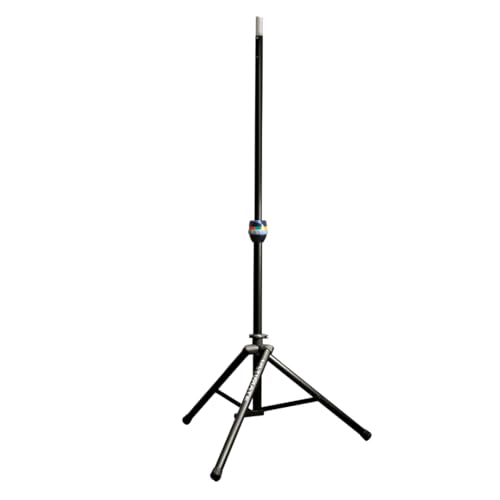 Ultimate Support TS-90B Telelock Tripod Speaker Stand Pair Ultimate Support TS-90B Telelock Tripod Speaker Stand Pair | TeleLock stands that hold height without a pin. On a portable system the pin is the part that gets lost, and a dropped speaker is a serious injury. | 1 | $219.99 | Price |
| Loudspeakers and stands subtotal | $1,519.97 | |||
Console and signal
A single rack unit that lives in a small case with everything else. No console surface means nothing to protect in transit.
| Item | Why this one | Qty | Price | Buy |
|---|---|---|---|---|
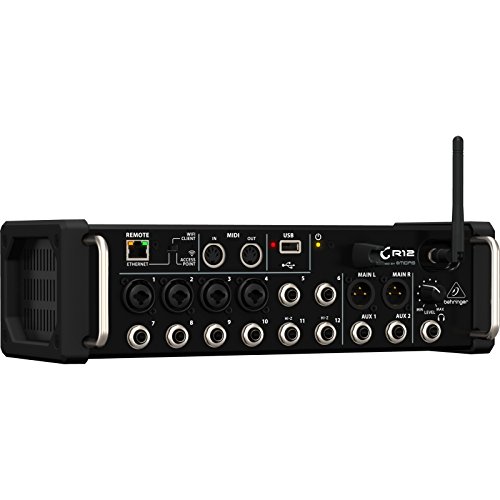 Behringer X Air XR12 Tablet-Controlled Digital Mixer Behringer X Air XR12 Tablet-Controlled Digital Mixer | Four preamps with full digital processing and recall in one rack unit. The cheapest way into scene recall, so the system comes up the same every week. | 1 | $369.00 | Price |
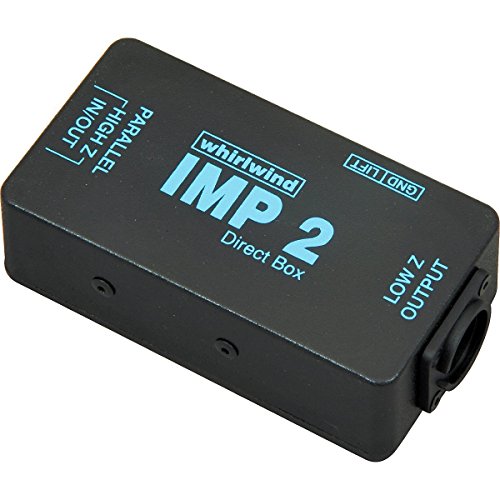 Whirlwind IMP 2 1-Channel Passive Instrument Direct Box Whirlwind IMP 2 1-Channel Passive Instrument Direct Box | Passive direct boxes for the keyboard and acoustic guitar. No power, nothing to fail in a bag. | 2 | $158.00 | Price |
| Console and signal subtotal | $527.00 | |||
Microphones and stands
| Item | Why this one | Qty | Price | Buy |
|---|---|---|---|---|
 Shure BLX14/P31 Wireless Headset Microphone System - H10 Band Shure BLX14/P31 Wireless Headset Microphone System - H10 Band | A headworn wireless system for preaching. In a rented hall with hard surfaces, the fixed mouth distance is what makes it usable at all. | 1 | $379.00 | Price |
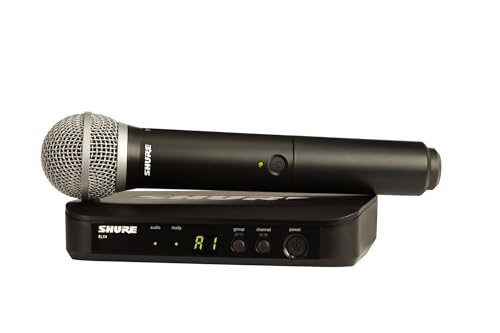 Shure BLX24/PG58 Wireless Vocal Microphone System - H10 Band Shure BLX24/PG58 Wireless Vocal Microphone System - H10 Band | A wireless handheld for announcements and a roaming speaker. The PG58 capsule keeps the cost down and the receiver upgrades later with just a capsule. | 1 | $329.00 | Price |
 Shure SM58 Pro XLR Dynamic Vocal Microphone Shure SM58 Pro XLR Dynamic Vocal Microphone | Wired vocals. Drop-proof, familiar, and the thing every visiting musician expects. | 2 | $218.00 | Price |
 On-Stage MS7701B Euro Boom Mic Stand (For Vocal and Instrument Microphones On-Stage MS7701B Euro Boom Mic Stand (For Vocal and Instrument Microphones | Tripod booms that fold flat into a bag. | 3 | $95.85 | Price |
| Microphones and stands subtotal | $1,021.85 | |||
Monitoring
Wired in-ears rather than wedges: two fewer boxes to carry, two fewer power outlets to find, and far less noise in a room you do not control.
| Item | Why this one | Qty | Price | Buy |
|---|---|---|---|---|
 Behringer P2 Ultra-Compact Personal In-Ear Monitor Amplifier Behringer P2 Ultra-Compact Personal In-Ear Monitor Amplifier | A belt-clip amplifier fed from an aux send, which turns a spare aux into an in-ear mix for forty dollars. | 2 | $79.80 | Price |
 Shure SE215 PRO Wired Earbuds - Professional Sound Isolating Earphones, Clear Sound & Deep Bass, Single Dynamic MicroDriver, Secure Fit In Ear Monitor, plus Carrying Case & Fit Kit - Clear (SE215-CL) Shure SE215 PRO Wired Earbuds - Professional Sound Isolating Earphones, Clear Sound & Deep Bass, Single Dynamic MicroDriver, Secure Fit In Ear Monitor, plus Carrying Case & Fit Kit - Clear (SE215-CL) | Isolating earphones, which matter more in a rented room than an owned one because you cannot fix the acoustics. | 2 | $238.00 | Price |
 Sennheiser HD 280 Pro Headphone Sennheiser HD 280 Pro Headphone | Closed-back headphones for whoever is running sound, often standing in the room rather than in a booth. | 1 | $85.49 | Price |
| Monitoring subtotal | $403.29 | |||
Cases, power and cable
Everything in a case with a lid. Loose gear in a van is gear that breaks, and a broken cable on the fiftieth Sunday is how portable systems die.
| Item | Why this one | Qty | Price | Buy |
|---|---|---|---|---|
 Gator Cases Content Creator Series Wooden Studio Rack Case with 15.25" Rackable Depth, 12U (GR-STUDIO-12U) Gator Cases Content Creator Series Wooden Studio Rack Case with 15.25" Rackable Depth, 12U (GR-STUDIO-12U) | A small rack for the mixer, the power conditioner and the wireless receivers, so the electronics travel as one unit. | 1 | $199.99 | Price |
 Furman M-8Dx Merit X Series 8 Outlet Power Conditioner & Surge Protector with LED Voltmeter & Dual Lights Plus Hosa 18 Gauge Electrical Extension Cable Furman M-8Dx Merit X Series 8 Outlet Power Conditioner & Surge Protector with LED Voltmeter & Dual Lights Plus Hosa 18 Gauge Electrical Extension Cable | Filtered power with a voltmeter, which matters more in a rented building than in one you own, because you have no idea what the power is like. | 1 | $199.95 | Price |
 Pig Hog PHM50 Series 50' XLR Microphone Cables 2-Pack Pig Hog PHM50 Series 50' XLR Microphone Cables 2-Pack | Heavy-jacket cable. This is the single best place to spend an extra thirty dollars on a portable system. | 2 | $107.98 | Price |
 Amazon Basics XLR Microphone Cable for Speaker or PA System, Recording Studio, All Copper Conductors, 6MM PVC Jacket, 50 Foot Amazon Basics XLR Microphone Cable for Speaker or PA System, Recording Studio, All Copper Conductors, 6MM PVC Jacket, 50 Foot | Spares, because a dead cable in a rented hall cannot be fixed from a storeroom. | 4 | $78.92 | Price |
| Cases, power and cable subtotal | $586.84 | |||
Everything here fits in one estate car with the seats down. There is no installation cost because there is no installation, which is the largest single financial advantage of going portable and is worth stating to a launch team comparing it against renting an installed room.
- Setup time
- Under 30 minutes, two people
- Van trips
- About 6
- Heaviest single item
- 30 lb
- Console channels used
- 8 of 12
- Wireless channels
- 2
- Power outlets needed
- 3
- Suits
- Up to about 120 people in a hall
Prices were accurate when this list was compiled and change often, so confirm each one before the committee votes. Quantities are multiplied into the total. This total covers equipment only: it does not include installation labor, rigging, conduit, electrical work or permits, which on an installed system commonly add 30 to 60 percent.
On this page
What actually kills portable church systems
Not sound quality. Three things, in this order: setup time creeping past an hour, the pool of able volunteers shrinking, and cable failures nobody can fix in a rented building. Every choice above is aimed at those three rather than at fidelity.
A practical rule: photograph the finished setup and tape the photograph inside the rack lid. It sounds trivial, and it is the difference between a new volunteer succeeding alone and phoning somebody at 7am.
Setting up in a room you do not control
- Find the power first. Before anything comes out of the van, find out which outlets work and whether they are on the same circuit. In older buildings a single 15 amp circuit shared with the coffee urn is a genuine problem.
- Place the speakers before the stands go up. Stand where the back row will be. The speakers need to be high enough that the horn clears standing heads and aimed at that spot, not at the front row.
- Run cable along walls, never across walkways. A taped cable across a school hall floor is a trip hazard and a liability question in a building that is not yours.
- Scan for wireless before the room fills. A school or a cinema has its own wireless systems and its own interference. Scan and set frequencies while the room is empty, not while people are arriving.
- Recall the scene and check every channel. Walk the platform with a headphone amplifier and listen to every input before anyone needs it. This takes four minutes and prevents the most common Sunday failure.
- Photograph the finished setup. Keep the photograph in the rack. It is the fastest training tool a portable church has.
What this system covers
Two 1,000 watt powered 12 inch speakers comfortably cover a room of up to about 120 people for speech and a small band, and run out at roughly 200.
| Room | People | Does this system cover it? | What is needed instead |
|---|---|---|---|
| School classroom or small hall | Up to 60 | Comfortably | Nothing, you could run one speaker |
| School gymnasium or cinema screen | 60 to 120 | Yes | Watch the acoustics rather than the level |
| Larger hall or theatre | 120 to 200 | At the limit | A third box, or step up to the growing portable system |
| Full auditorium | Over 200 | No | The full portable system, with subwoofers and more coverage |
| Outdoors | Any | Poorly | There are no walls to reflect, so you need roughly twice the power |
What you can skip
Skip the subwoofer. It is the heaviest thing you could add, it needs its own outlet, and in a rented room with unknown acoustics it is as likely to make things worse as better.
Skip floor wedges. Two more boxes, two more stands, two more outlets and a noticeably louder room. Wired in-ears do the job for a tenth of the weight.
Skip the second wireless channel until you need it. Every wireless channel is a battery to remember on a morning where something is always forgotten.
What to upgrade first
Cases and a cart, before any electronics. Unglamorous and the highest-return purchase a portable church makes. A wheeled cart and proper cases cut setup time, cut breakage and, most importantly, widen the pool of volunteers who are physically able to be on the rota.
Then the console, when the band arrives. Four preamps is the hard ceiling here. The XR18 takes it to sixteen in the same three rack units, and the CQ-12T adds a touchscreen on the box itself, which matters on a morning when somebody forgets the tablet.
Frequently asked questions
How much does a portable church sound system cost?
About $4,059 for this complete list, including speakers, stands, a mixer, two wireless channels, wired in-ear monitoring, a rack, power conditioning and cable. There is no installation cost, which is the largest financial advantage of going portable and is worth putting in front of a launch team.
How long does a portable church system take to set up?
Under thirty minutes with two people, once the team has done it a few times and the gear lives in cases. The things that push it past an hour are loose gear in the van, cables that have to be untangled every week, and a setup that lives only in one person’s head. Cases, labelled cables and a photograph inside the rack lid fix all three.
Do we need a subwoofer for a portable system?
Almost never at this size. It is the heaviest item you could add, it needs its own outlet, and in a room whose acoustics you cannot control it is as likely to make the low end worse as better. If the band genuinely needs weight, add a third main speaker before adding a subwoofer.
Can one person set this up alone?
Yes, and that is a deliberate design goal. The heaviest single item is thirty pounds, the stands are lift-assisted and everything electronic lives in one small rack. One volunteer takes about forty-five minutes alone. Designing for one person is what keeps the rota from collapsing onto the same two people every week.
Should a church plant buy or rent?
Buy, in almost every case. Rental for a weekly service costs more within a few months, the gear is different every week so the volunteers never build competence, and you cannot leave anything set up or labelled. The only case for renting is a launch season of a handful of services while you decide what the room actually needs.
Researched, not professional advice. This page is compiled from published manufacturer specifications, operator manuals, FCC rules, published standards and owner-review consensus, not hands-on testing. Sound system design, rigging loudspeakers overhead, and any electrical work are jobs for a qualified professional: have flown loudspeakers and their attachment points signed off by a structural engineer or a certified rigger, and have all wiring done by a licensed electrician to your local code. Wireless microphone rules change, so confirm the current FCC position before buying. As an Amazon Associate we earn from qualifying purchases.