Wired microphones
Best Pulpit and Lectern Microphones
Quick answer
A 12 to 18 inch gooseneck condenser is the right microphone for a pulpit, starting at about $129 for the Audio-Technica PRO 49QL and $296 for the Shure MX418/C. A fixed lectern should never be served by a wireless channel, which adds cost and failure modes for no benefit.
The lectern is the easiest channel in a church to get right and one of the most commonly got wrong. It never moves, so it needs no radio, no batteries and no frequency plan. It has a known talker distance, so the gain structure can be set once. And it sits on a solid surface, so the only real enemies are page turns, knocks transmitted through the furniture, and a gooseneck long enough to swing toward a loudspeaker. Spend the wireless budget elsewhere and wire this position properly. For the whole approach see how to mic a pulpit and the pulpit and lectern position.
On this page
- What gooseneck length does a lectern need?
- Small church: a first proper lectern microphone, $119 to $129
- Mid-size church: a lectern that gets locked away, $239
- Large room or permanent install: $296
- Why a lectern should not be wireless
- Lectern microphones compared
- What usually goes wrong at the lectern
What gooseneck length does a lectern need?
Length is chosen from the height of the lectern surface and the height of the people who use it, and the target is a capsule roughly 8 to 12 inches from the mouth, angled up toward it. Too short and every speaker has to lean forward, which they will not remember to do. Too long and the microphone becomes something people move, which changes the aim and eventually points it at a loudspeaker.
A standard 42 inch lectern used by a standing adult wants an 18 inch gooseneck, which puts the capsule about 10 inches from the mouth without anyone leaning.
| Lectern surface height | Typical talker | Gooseneck length | Notes |
|---|---|---|---|
| 36 to 40 in | Seated or short standing | 18 in | Longer neck compensates for the low surface |
| 40 to 44 in | Standing adult | 18 in | The common case, capsule about 10 in from the mouth |
| 44 to 48 in | Standing adult, tall pulpit | 12 in | Short neck keeps the capsule out of the sightline |
| Over 48 in | Raised pulpit | 12 in | Capsule is already close, a long neck would overshoot |
| Variable, shared lectern | Mixed heights | 18 in plus quick mount | Removable so it can be stored between services |
A shorter gooseneck rejects more of the room because the speaker must stand closer to it, which is an advantage in a live sanctuary and a liability if the people using the lectern will not come close enough. Choose for the people, not for the specification.
Small church: a first proper lectern microphone, $119 to $129
Most small churches start with a handheld on a stand at the lectern, which works and looks wrong. A gooseneck is a genuine upgrade for very little money: it aims consistently, it stays where it is put, and it removes the stand from the sightline. A quick mount version can be unplugged and locked away, which matters in a building used by other groups.
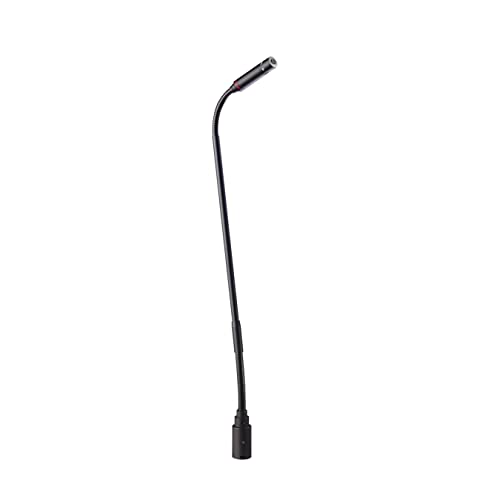
Audio-Technica PRO49QL Propoint Gooseneck Microphone
$129.00The affordable quick mount gooseneck, and a genuine upgrade over a handheld on a stand. It unplugs from its base so it can be stored between services.
Best for: A first proper lectern microphone
Check price on Amazon
Shure SM58S Pro XLR Dynamic Vocal Microphone with On/Off Switch
$119.00Where a gooseneck cannot be fitted, the SM58 with a switch is the right handheld for a shared lectern, with the warning that someone will eventually find it switched off.
Best for: A shared announcement microphone on a stand
Check price on AmazonWho should not buy this tier: A live stone or plaster room where the gooseneck will need to be short and directional to stay stable.
Mid-size church: a lectern that gets locked away, $239
Shared buildings create a specific problem: the lectern is used by a church on Sunday and by a community group on Tuesday, and equipment left in place goes missing or gets adjusted. A quick mount gooseneck solves this without unbolting anything, and it means the microphone is only ever in position when someone who knows how to use it is present.

Audio-Technica U857QL Cardioid Condenser Quick-Mount Gooseneck Microphone
$239.00A quick mount gooseneck that unplugs from its base, so the microphone can be locked away between services without removing hardware from the lectern.
Best for: A shared or unsupervised lectern
Check price on Amazon Audio-Technica PRO49QL Propoint Gooseneck Microphone
$129.00The cheaper quick mount option for a second lectern or a portable podium that only comes out occasionally.
Best for: A second or occasional speaking position
Check price on AmazonWho should not buy this tier: Permanent installations in a live room, where an internal shock mount and a tighter pattern are worth the step up.
Large room or permanent install: $296
In a large or reverberant sanctuary the lectern channel has to be stable at real gain, and two things deliver that: an internal shock mount so the furniture stops feeding mechanical noise into the capsule, and a pattern tight enough to reject the nearest loudspeaker. This is also the tier where the microphone becomes part of the joinery rather than something placed on top of it.

Shure MX418/C Cardioid Condenser Gooseneck Microphone
$296.00 Specs and sizingAn 18 inch gooseneck with the preamplifier in the base and a proper shock mount, so page turns and lectern knocks do not arrive in the house.
Best for: A fixed pulpit where the preacher stays put
Check price on Amazon
Shure MX412/S Supercardioid Condenser Microphone, 12" Gooseneck with Attached XLR Preamp, Shock & Flange Mount, Snap-Fit Foam Windscreen
$296.00 Specs and sizingThe 12 inch supercardioid version, less visually intrusive and rejecting more of the room. The short neck means the speaker must stay closer, which is a training question.
Best for: A lectern in a live room where a longer gooseneck rings
Check price on AmazonWho should not buy this tier: A small carpeted church with one lectern used twice a month. A $129 quick mount gooseneck in that room is indistinguishable from the pews, and the difference is better spent on the preaching channel, which is the one that actually moves.
Why a lectern should not be wireless
Churches put wireless on lecterns surprisingly often, usually because a handheld system was already owned. It is worth stating the case against plainly. A wireless channel at a fixed position adds a battery that can die, a frequency that can be interfered with, a transmitter that can be left switched off, and a receiver occupying rack space and spectrum that a moving position could have used. It removes nothing, because the cable run to a lectern is fixed furniture in a fixed floor.
The one honest exception is a portable lectern in a building with no floor boxes, where running a cable across a walkway is a trip hazard. Even then, a floor box or a cable ramp is usually cheaper over five years than a wireless channel and its batteries. Count your genuinely mobile positions in the channel calculator and you will usually find the lectern is not one of them.
Lectern microphones compared
| Model | Price | Microphone type | Polar pattern | Needs phantom power | Height |
|---|---|---|---|---|---|
| Audio-Technica PRO49QL Propoint Gooseneck Microphone | $129.00 | Condenser | Cardioid | Yes | - |
| Audio-Technica U857QL Cardioid Condenser Quick-Mount Gooseneck Microphone | $239.00 | Condenser | Cardioid | Yes | - |
| Shure MX412/S Supercardioid Condenser Microphone, 12" Gooseneck with Attached XLR Preamp, Shock & Flange Mount, Snap-Fit Foam Windscreen | $296.00 | Condenser | Supercardioid | Yes | 12 in |
| Shure MX418/C Cardioid Condenser Gooseneck Microphone | $296.00 | Condenser | Cardioid | Yes | 18 in |
What usually goes wrong at the lectern
Page turns and knocks, which arrive as thumps because the microphone is bolted to the same piece of wood the speaker is leaning on. An internal shock mount is the real fix; a high pass filter on the channel is the free one and gets most of the way there.
Second, the microphone that has been aimed by a succession of well meaning people until it points at the ceiling or, worse, at a loudspeaker. Set the aim once, then mark the flange position so a volunteer can restore it. Third, the assumption that the lectern channel can be mixed like a vocal: it is a speech channel, it wants a high pass filter, gentle compression and no reverb, and it should be muted whenever nobody is at it. Every open microphone costs the whole system gain before feedback, which is covered in eliminating feedback and gain structure.
How we chose
We did not test these products in person and we never claim to. Picks are researched from manufacturer specification sheets and operator manuals, FCC rules where spectrum is involved, published standards, warranty terms, and the recurring themes in verified owner reviews. Every pick is matched to a real room size, seat count or input list rather than to a price bracket, and it is placed in the tier where its capability actually belongs. Where a product is wrong for most churches we say so on the page.
Sources
Frequently asked questions
What length gooseneck microphone does a pulpit need?
An 18 inch gooseneck suits a standard 40 to 44 inch lectern used by a standing adult, putting the capsule about ten inches from the mouth without anyone leaning forward. A 12 inch neck suits a tall or raised pulpit where the surface is already close to the speaker. Choose for the people who will actually use it rather than for the room.
Should a lectern microphone be wireless?
No. A lectern does not move, so a wireless channel adds a battery, a frequency, a transmitter that can be left off and a receiver occupying rack space and spectrum, while removing nothing. The only honest exception is a portable lectern in a building with no floor boxes, and even then a floor box or cable ramp is usually cheaper over five years.
Do gooseneck microphones need phantom power?
Yes. Gooseneck microphones for lecterns are condensers and require 48 volt phantom power from the console or stage box. On a digital console this is a per channel switch. On some older analog boards it is a single global switch covering a bank of inputs, which is worth checking before you connect anything else that might object to receiving it.
Why does our pulpit microphone pick up thumps and page turns?
Because it is mechanically coupled to the furniture the speaker is leaning on, so knocks travel through the woodwork into the capsule. A gooseneck with an internal shock mount is the proper fix. A high pass filter on the channel, set around 100 Hz, removes most of the energy for free and should be engaged on any speech channel regardless.
Cardioid or supercardioid for a lectern?
Cardioid is the safe default and suits most rooms, rejecting sound arriving directly behind the capsule. Supercardioid rejects more of the room overall and suits a live sanctuary or a lectern close to a loudspeaker, but it has a narrower usable angle, so anyone stepping slightly off centre loses level. Match the pattern to how disciplined the speakers are.
Can one gooseneck microphone cover two people at a lectern?
Not well. A single cardioid capsule aimed at one talker will leave a second person several decibels down and off axis, which sounds thin and requires gain that pushes the channel toward feedback. Two microphones on one lectern create comb filtering unless spaced by the three to one rule. A second speaking position deserves its own microphone.
Researched, not professional advice. This page is compiled from published manufacturer specifications, operator manuals, FCC rules, published standards and owner-review consensus, not hands-on testing. Sound system design, rigging loudspeakers overhead, and any electrical work are jobs for a qualified professional: have flown loudspeakers and their attachment points signed off by a structural engineer or a certified rigger, and have all wiring done by a licensed electrician to your local code. Wireless microphone rules change, so confirm the current FCC position before buying. As an Amazon Associate we earn from qualifying purchases.